
Reviewed · JAIPUR HERITAGE WALKING TOURS
Jaipur Heritage Walking Tour – Local life, Havelis and Temples
Jaipur’s best stories often unfold away from ticket counters, in flower stalls, temple rituals, craft workshops, and lanes lined with old havelis. This three-hour walk takes you through that everyday side of the Pink City, with guide Viru bringing local customs and landmarks into focus.
I like the market and craft stops, which give you more than postcard views, and the chance to see an Aarti ceremony at Govind Devji Temple. Free water, snacks, tea, and coffee add real value at a $16 price. The main consideration is that Hawa Mahal is seen from outside, and the walk can feel full on a warm Jaipur day.
Key points at a glance

- See Jaipur beyond the main monuments: Walk through flower and vegetable markets, old lanes, havelis, and working craft areas.
- Meet local guide Viru: He is praised for clear explanations, a friendly manner, and adjusting the pace for families, including one with an eight-year-old.
- Catch a temple ceremony: The route includes Govind Devji Temple and one of its daily Aarti rituals, with the morning ceremony specifically recommended.
- Spend serious time at Tripolia Bazar: The schedule allows about 90 minutes for crafts, local stalls, and demonstrations such as lac bangle making and marble carving.
- Taste carefully chosen street food: Snacks come from vendors selected by the tour, with tea or coffee and bottled water included.
- Know what is not included: Hawa Mahal admission is not included, and the experience does not provide private transportation.
Why this walk shows you a more useful Jaipur
The grand monuments of Jaipur are easy to find. The harder part is understanding how the old city works around them. This walk helps with that. You move through commercial lanes, religious spaces, market stalls, and traditional workshops rather than spending the whole morning inside one palace.
That matters because Jaipur’s Pink City is not only a collection of royal buildings. It is also a living part of town where flowers are sorted for sale, artisans work with metal and stone, and worshippers gather for daily ceremonies. You get a look at those ordinary routines while still seeing famous landmarks such as Hawa Mahal.
The pace is also useful for a first day in Jaipur. In three hours, you can get your bearings around the old city, learn a few local customs, sample snacks, and decide which places deserve a longer visit later. I would not treat this as a substitute for the City Palace, Amber Fort, or a full visit inside Hawa Mahal. I would treat it as a compact introduction to the city’s streets and people.
The tour is listed at $16 per person. That is a low price for a private or small-group walking experience, especially with snacks, hot drinks, and bottled water included. The value depends on what you want. If you mainly want long visits inside major monuments, your money may be better spent on entrance tickets and a separate guide. If you want context, food, markets, and local activity, this is a strong use of three hours.
It is booked an average of 42 days ahead, so the early booking pattern is worth noting. If you have a fixed morning in Jaipur, reserve before you arrive rather than assuming a last-minute place will be available.
More heritage walks in Jaipur:
- Jaipur Bazaar & Food Walking Tour
★ 5.0 · 281 reviews - Heritage Walk & Street Food Tasting in Jaipur
★ 5.0 · 158 reviews - Food Walking Tour in Jaipur
★ 5.0 · 71 reviews
Starting beside Hawa Mahal on Hawa Mahal Road
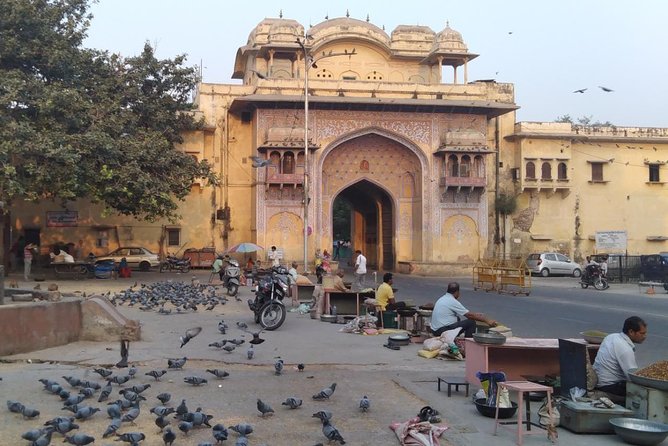
The meeting point is on Hawa Mahal Road near Badi Choupad and J.D.A. Market in the Pink City. This puts you right in the old city, close to one of Jaipur’s most recognizable façades and within reach of public transportation.
Your first landmark is Hawa Mahal, also called the Palace of Wind. Built in 1799 by King Sawai Pratap Singh, the five-story façade was designed so women of the royal court could watch processions and market life without being seen from the street.
The scheduled stop is about 10 minutes, and admission is not included. That means you should expect an exterior introduction rather than a full palace visit. This is not a flaw if you have already toured the interior or want a quick orientation, but it is important to know before booking.
The façade is particularly useful as a starting point because it connects the royal past with the street activity around it. You can look at the screened windows, then move directly into the lanes and markets that once formed part of the city’s daily commercial life. Keep your expectations focused on the outside view and the guide’s explanation.
Old havelis and the quieter details of the Pink City
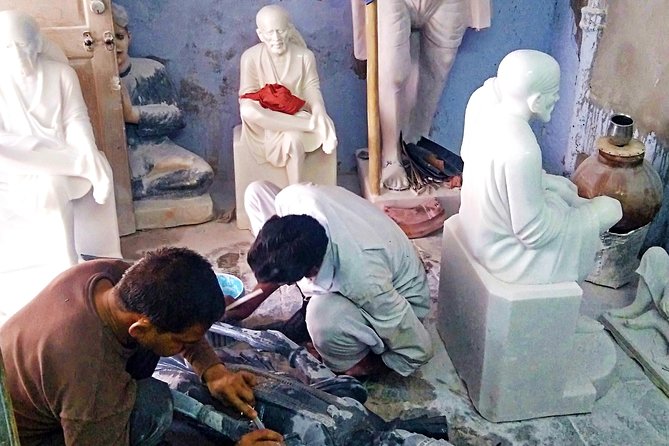
The route then takes you through narrow lanes and past old havelis, the traditional homes of Jaipur’s prominent families. You may see carved details, painted frescoes, courtyards, and building fronts that are easy to miss when you are moving from one major sight to the next.
The stop is listed near the City Palace area, but the focus here is on the old residential architecture rather than a full palace admission. You do not need another grand entry ticket to appreciate this part of the walk. The pleasure comes from noticing doors, balconies, painted surfaces, and the shape of the courtyards.
This is also where a local guide earns his keep. A bare map can show you the lane, but it cannot easily explain how a haveli was arranged or why a small decorative detail matters. Viru has been praised for making Jaipur’s past understandable and for bringing the city to life through his explanations.
The planned time is short, about 10 minutes, so think of this as a focused look rather than a detailed architectural tour. If you are drawn to old buildings, ask questions while you walk. The route’s strength is the connection between several small discoveries, not one long stop.
The wholesale flower and vegetable market
The 30-minute market visit is one of the most distinctive parts of the experience. You see Jaipur’s only wholesale flower and vegetable market, where the city’s daily food and religious life meet in one working place.
A wholesale market is different from a shop-lined bazaar aimed at sightseers. It gives you a better sense of how goods move through Jaipur before reaching homes, restaurants, temples, and smaller stalls. The flowers are especially relevant in a city where offerings play an important role in worship.
This stop also adds color and texture without turning the tour into a staged performance. You are watching commerce take place, with the guide helping you understand what you are seeing. The exact products and activity can vary by time and day, so you should see this as a real market visit rather than a fixed show.
The market may be one of the livelier parts of the walk, and the ground can be busy underfoot. Wear comfortable shoes and keep your attention on your surroundings. Bottled water is included, which is welcome if the weather is hot.
More history-led tours in Jaipur:
- Private Full-Day Sightseeing Tour of Jaipur’s Heritage by Car
★ 5.0 · 110 reviews - Jaipur Heritage Evening Walk – The Twilight Magic of Pink City
★ 5.0 · 93 reviews - Nahargarh Water Walk – Guided 2-Hour Heritage Tour in Jaipur
★ 5.0 · 89 reviews - Jaipur@Twilight Guided Heritage City walk tour with Food Tasting
★ 5.0 · 67 reviews
Govind Devji Temple and an Aarti ritual
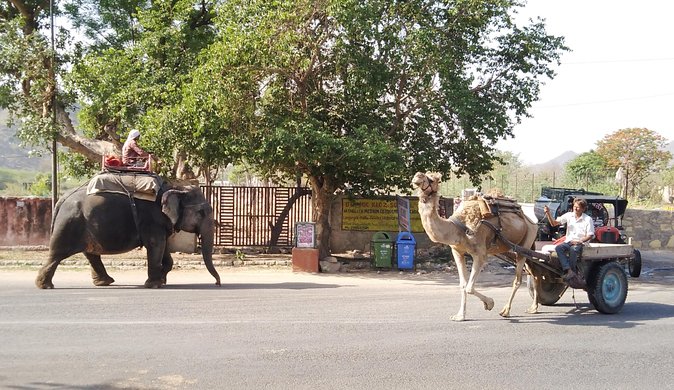
At Govind Devji Temple, the walk shifts from commerce to worship. This 18th-century Hindu temple is dedicated to Govind Devji and is one of Jaipur’s important religious sites.
The tour includes the chance to see one of the temple’s seven Aarti ceremonies, a ritual involving prayer and devotional offerings. The timing matters. The tour team specifically advises joining the morning ceremony, so check the schedule when you book and choose a start time that gives you a realistic chance of seeing it.
This is a place where respectful behavior matters more than photography. The guide can help you understand what is happening and how to behave in the temple setting. The planned visit lasts about 15 minutes, so it is a short encounter rather than a long religious lecture.
I like this stop because it gives the old city a human rhythm. Palaces tell you about rulers and wealth. A temple ceremony shows how the city’s religious life continues day after day. If you are interested in culture rather than only architecture, this may be the most meaningful part of the morning.
The ceremony is also one reason to avoid treating the start time as a minor detail. A late or poorly timed arrival could mean missing the ritual altogether. If this is a priority, confirm the morning schedule with the provider before setting your plans around it.
Tripolia Bazar, artisans, and Jaipur’s working crafts
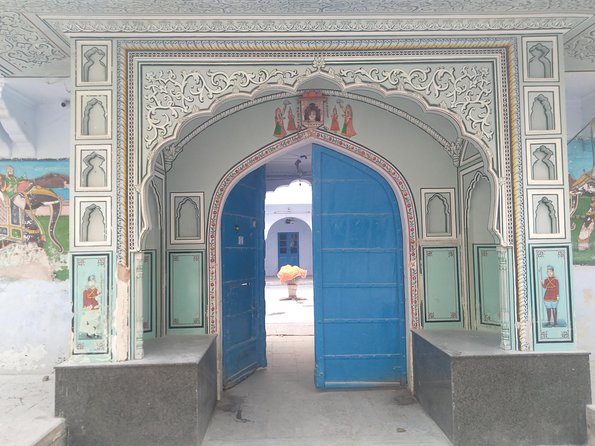
Tripolia Bazar receives the longest scheduled block, about an hour and a half. That tells you where the tour’s center of gravity lies. This is not a quick pass through a shopping street. You have time to look at traditional crafts, watch demonstrations, and browse at a less hurried pace.
The craft work can include lac bangle making, marble carving, and brass utensil production. These are useful stops because they show how Jaipur’s decorative traditions are made, not just how finished goods appear in a shop window.
Lac bangles are particularly tied to the color and ornament associated with Rajasthan. Marble carving and brass work show another side of the city’s artisan skills, with raw materials shaped into objects for homes, worship, and decoration. Demonstrations give you a better basis for judging the work if you decide to buy something later.
You should still keep normal shopping sense. The tour provides access to the craft areas, but it does not promise that you will find a specific product or receive a special price. Enjoy the work first. Buy only if you genuinely want the item and understand the cost.
Tripolia Bazar is also where the food portion fits naturally into the route. The tour includes local street food snacks from selected vendors, plus coffee or tea. The information does not specify the exact dishes, so you should not book it expecting one named specialty. Instead, expect a few small tastes chosen during the walk.
That arrangement is useful if you are cautious about street food. You get an introduction through vendors the guide considers reliable, rather than having to choose blindly on your first day. Still, tell the guide about allergies or dietary restrictions before eating, since no specific menu is provided.
Guide Viru and the pace of the experience
The strongest personal element here is guide Viru. He is described as clear, friendly, and willing to adjust the pace. One family found that he adapted well to an eight-year-old, which matters if you are bringing children who may lose interest during a long history talk.
Another useful sign is that a guest booked Viru separately for Amber Fort after this walking tour. That does not mean you should automatically add another excursion, but it suggests the guide can be useful beyond the three-hour route if you want more help in Jaipur.
The tour information uses both small-group and private-tour language. It highlights small group sizes, while the additional details say only your group will participate. If having a fully private walk is important to you, confirm the format at booking. Either way, the guide-led structure should allow more personal attention than a large coach tour.
At three hours, the route is long enough to feel substantial but short enough to fit around other Jaipur plans. You return to the original meeting point, and no private transportation is provided. The walk is therefore best for someone happy to stay on foot in the Pink City rather than someone looking for door-to-door sightseeing.
Who will get the most from this Jaipur tour
I would recommend this walk to you if you want:
- A first look at Jaipur’s old city before tackling its larger monuments
- Markets, crafts, food, and religious life alongside famous sights
- A guide who can explain local customs and adjust to your pace
- A short experience that fits into a morning or afternoon
- A lower-cost alternative to a private full-day sightseeing tour
- A family-friendly introduction that does not rely only on long museum visits
I would be more cautious if you want a deep visit inside every major building. Hawa Mahal admission is not included, the City Palace stop focuses on old havelis and lanes, and the temple visit is brief. You will see a lot, but you will not spend an hour inside each monument.
The walk also suits people who are comfortable with street conditions and changing levels of activity. You move through markets, narrow lanes, temple surroundings, and craft areas. Good walking shoes are sensible, and you should allow some flexibility around the ceremony timing.
Booking, cancellation, and practical value
Confirmation is provided at booking, and the meeting point is near public transportation. The experience ends back where it begins, which makes it easier to plan your next Jaipur activity without arranging a separate pickup.
Free cancellation is available until 24 hours before the start time for a full refund. Inside that window, the payment is not refunded, and changes are not accepted. Poor weather or failure to reach the required minimum number of participants can also lead to a different date or a full refund.
The $16 price includes snacks, bottled water, and coffee or tea, but not transportation or Hawa Mahal admission. For a three-hour walk with a local guide and several distinct stops, I consider that good value, particularly if you want experiences that do not require a series of separate entrance tickets.
Should you book the Jaipur Heritage Walking Tour?
Book it if you want Jaipur explained through its streets, markets, temple customs, and craft traditions. The flower market, Govind Devji ceremony, and long Tripolia Bazar visit give the walk more substance than a simple photo stop tour. Guide Viru is another reason to consider it, especially if you value a flexible pace and clear local explanations.
Skip it if your main goal is to tour the interiors of Hawa Mahal and City Palace. In that case, choose a monument-focused guide instead. For most first-time visitors who want a friendly, low-cost introduction to the Pink City, this walk makes a sensible starting point.
FAQ
How long does the Jaipur Heritage Walking Tour last?
The tour lasts approximately three hours and returns to the original meeting point.
Where does the tour start?
It starts on Hawa Mahal Road near Badi Choupad and J.D.A. Market in the Pink City, Jaipur.
Is admission to Hawa Mahal included?
No. The Hawa Mahal stop is an exterior visit, and the admission ticket is not included.
What food and drinks are included?
The tour includes snacks from selected local vendors, bottled water, and coffee or tea. Specific dishes are not listed.
Can I see a ceremony at Govind Devji Temple?
The route includes one of the temple’s Aarti ceremonies. The morning ceremony is specifically recommended, so timing your booking is important.
What happens if I need to cancel?
You receive a full refund if you cancel at least 24 hours before the start time. Cancellations or changes made within 24 hours are not refunded or accepted.
Newest Jaipur trips we have written up
- Jaipur Private Tour 2 Days with Car & Guide★ 5.0 · 13 reviews
- Culture walking and food tour with guide in Jaipur.★ 5.0 · 5 reviews
- From Jaipur Private Taj Mahal & Agra Fort Tour with Delhi Drop★ 4.5 · 9 reviews
- Two days Jaipur tour with guide by private car.★ 5.0 · 13 reviews
- Jaipur Full Day Private Tour★ 5.0 · 6 reviews
- Explore Jaipur on a Motorbike – A Unique Experience★ 4.5 · 5 reviews
- Vintage Walk Amer★ 5.0 · 11 reviews
- Walking Tour of Pink City (World Heritage Site) with Local Guide★ 5.0 · 7 reviews
Jaipur Heritage Walking Tours, compared.




Private Half Day Food and Walking Tour of Jaipur
Read our review →
Heritage Culture and History Walking Tour in Jaipur
Read our review →

Browse the lists this tour appears in