
Reviewed · JAIPUR HERITAGE WALKING TOURS
Cyclin’Jaipur – Pink City Heritage walking Tour
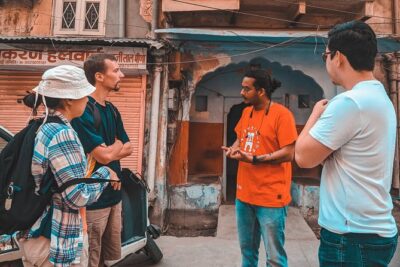
Jaipur’s best stories often unfold away from its grand facades. This three-hour walk takes you from Hawa Mahal and City Palace into vegetable and flower markets, temple courtyards, and artisan lanes where marble carvers, silversmiths, bangle makers, and metal workers carry on old trades. It is a useful way to see how the Pink City works today, not just how it looked in royal times.
I like the small group limit of eight, which should make narrow lanes and market stops easier to manage. I also like the simple extras: bottled water, snacks, coffee or tea, and a chance to taste local treats such as pyaaz kachori and roadside masala tea. The main consideration is physical effort. You walk for about three hours, and modest clothing is required, with no short pants or sleeveless tops.
Key points at a glance
- Start beside Hawa Mahal: The famous pink sandstone palace is the natural meeting point and a handy introduction to Jaipur’s old city.
- See working markets, not just monuments: The route includes vegetable and flower markets, where farmers and sellers go about their daily business.
- Meet Jaipur’s craftspeople: Marble carvers, silversmiths, bangle makers, and metal workers help explain why Jaipur is known for handmade goods.
- Choose your rhythm: You can book a morning or afternoon departure, while an early start may offer cooler walking and livelier market activity.
- Local food is part of the route: Tea, snacks, water, and coffee are included, with past walks featuring pyaaz kachori and masala tea.
- Good for first-time and returning visitors: The walk covers major sights while also taking you into lanes you could easily miss alone.
Why this walk works in Jaipur’s old city
Jaipur can feel like two places at once. The city has grand palaces, broad historic avenues, and the instantly recognizable pink walls. It also has small lanes filled with shopkeepers, worshippers, farmers, and craftspeople. This tour is designed to connect those two sides.
You begin near Hawa Mahal, the honeycomb-like palace built from pink sandstone. Its many windows once allowed royal women to watch street life without being seen. Even if you have already photographed the building, meeting here gives you a clear starting point in the old city.
From there, the walk moves into the City Palace complex. This is the royal side of Jaipur, with courtyards and buildings tied to the city’s ruling family. The tour does not simply leave you at the palace entrance and move on. It uses the complex as a way to explain Jaipur’s royal identity before shifting attention to ordinary city life.
That contrast is the heart of the experience. One moment you are looking at royal architecture. Soon after, you are watching market sellers arrange produce or seeing a craftsperson work with metal, stone, or glass bangles.
More heritage walks in Jaipur:
- Jaipur Bazaar & Food Walking Tour
★ 5.0 · 281 reviews - Heritage Walk & Street Food Tasting in Jaipur
★ 5.0 · 158 reviews - Jaipur Heritage Walking Tour – Local life, Havelis and Temples
★ 5.0 · 72 reviews
Hawa Mahal and the royal quarter
Hawa Mahal is a strong meeting point because it is easy to identify and sits close to many of the old city’s main sights. The tour starts here with a local guide, then leads you toward the City Palace complex.
The palace visit gives you useful context for the rest of the walk. Jaipur was planned as a royal capital, and the old city’s buildings, streets, and markets grew around that center of power. If you only visit the palace on your own, you may notice the decoration but miss how closely royal Jaipur was tied to trade and skilled work.
Allow yourself time to look up as you walk. The old city is full of painted surfaces, carved details, balconies, and shop fronts. The guide’s job here is less about rushing from one famous building to another and more about helping you understand how the pieces fit together.
The tradeoff is that this is a walking tour, not a full sightseeing visit to every major palace or fort in Jaipur. If your main goal is Amber Fort, this is not the right tour. Its focus is the Pink City and its everyday culture.
A temple prayer ceremony
The route continues to one of Jaipur’s best-known temples, where you can witness a Hindu prayer ceremony. This can be one of the more meaningful parts of the walk because it shifts the focus from architecture to living religious practice.
You should treat this stop with care. Dress modestly, follow the guide’s instructions, and watch quietly during the ceremony. The clothing rule for the tour is clear: no short pants or sleeveless attire. That is practical advice for the temple as well as for the rest of the old city.
The exact temple is not identified in the tour details, so you should not book this expecting a particular named shrine. What is clear is that the visit gives you a chance to see a prayer ritual as part of Jaipur’s daily life, rather than as a staged performance.
Vegetable and flower markets
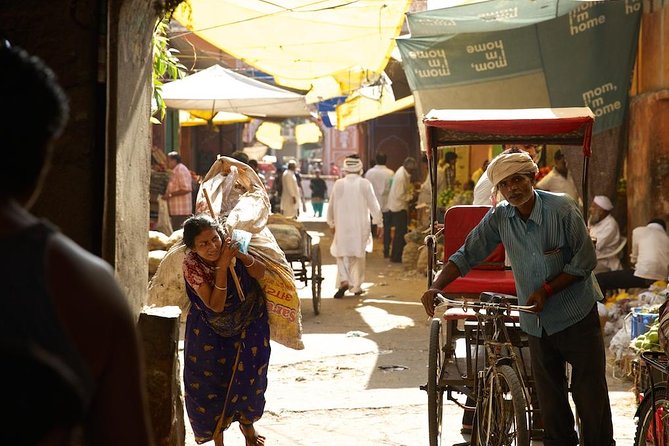
The market section is where the tour becomes especially useful for someone who wants more than Jaipur’s postcard sights. You enter one of the city’s largest wholesale vegetable markets, with sellers and farmers handling produce in a setting built around work, trade, and movement.
This is not a polished market made for sightseeing. That is precisely why it can be interesting. You may see produce being sorted, carried, or sold, and the guide can help you understand what you are looking at. The colors and activity make for good photographs, but remember that people are working. Ask before taking close-up pictures.
The flower market adds a different mood. Farmers bring flowers for sale, and the displays offer a quick lesson in the role of flowers in Indian religious and social life. The tour description places the flower market along the route, so this is not a separate transport stop. You walk through the old city from one part to the next.
Morning is likely the better choice if the markets are a major reason for booking. An early departure has been used on past tours, including a 6:45 a.m. start, and that timing can help you see the city before the day grows hot. The official options are morning or afternoon, so confirm the exact start time when booking.
An afternoon walk may suit you better if you prefer a slower start or have arrived late. The tradeoff is simple: temperatures and market activity can differ by time of day, and the tour does not promise the same scene at every departure.
More Jaipur sightseeing tours:
- Jaipur: Private Full Day Sightseeing Tour By Car with Guide
★ 4.9 · 1,839 reviews - 3-Hour Morning Bike Tour of Jaipur
★ 5.0 · 1,253 reviews - Jaipur: Private Sightseeing Day Tour with Guide by Car
★ 4.8 · 773 reviews - Jaipur: Full-Day City Tour with Car, Guide & Skip-the-Line
★ 4.8 · 512 reviews
Jaipur’s artisan lanes and traditional trades
The craft section gives the walk its strongest sense of place. Jaipur is known for handmade work, and the route leads toward a marble carvers’ district and other artisan areas.
You may meet sculptors, silversmiths, bangle makers, and metal workers. These are not merely souvenir stops. They show how the city’s decorative traditions are kept in use through small workshops and family trades. Seeing the tools and materials in front of you adds meaning to the jewelry, carvings, and household goods sold elsewhere in Jaipur.
Past walks have also included a hand fabric printing factory and a family making jewelry and spinning tops. Those details suggest that the exact craft encounters can vary, but the basic idea is consistent: you are taken to working makers rather than shown only finished objects in a large shop.
That can be a benefit, though you should expect commercial interest in some workshop visits. If you want to buy something, ask about the price, materials, and whether the item is handmade locally. If you do not want to shop, say so politely and enjoy the demonstration.
The route is particularly good for people who like learning how objects are made. It may be less satisfying if you want a quiet heritage walk with long stops at monuments. This experience gives equal weight to people, work, food, worship, and buildings.
Tea, snacks, and small tastes of Jaipur
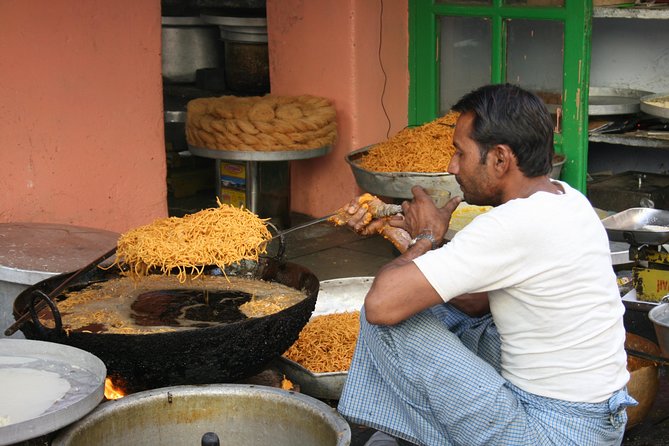
Water and snacks are included, along with coffee and tea. The food element helps break up the walking and gives you a chance to try something associated with the city rather than simply stopping at a standard restaurant.
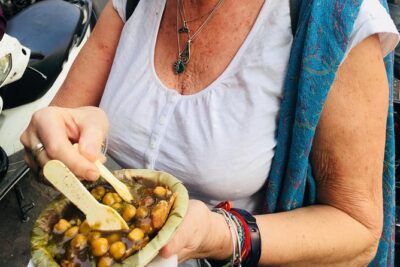
Pyaaz kachori and roadside masala tea have featured on past walks. A pyaaz kachori is a fried pastry filled with spiced onion, often served as a popular snack. It is a small detail, but it can be one of the most memorable parts of a morning in Jaipur.
The tour does not promise a full meal, so do not treat the included food as lunch. If you have dietary restrictions, the supplied information does not explain how they are handled. You should ask the operator before booking.
I like that refreshments are built into the price because a three-hour walk through the old city can be tiring. Still, bring an open mind about the setting. The food may be served in a simple local context rather than a formal dining room.
Guides, languages, and group size
The experience is limited to a maximum of eight people. That is a useful size for a market walk. A guide can usually keep a small group together more easily in narrow streets, and you have a better chance to ask questions without slowing down a large crowd.
Several guides are associated with past versions of the experience. Virendra has led heritage walks, while Raju has been praised for his French and for guiding people through craft, market, and food stops. Sid has helped with traffic and personal safety on combined cycling and walking experiences, and Parveen has also guided visitors through the old city.
Do not assume that one particular guide will lead your departure unless the booking confirms it. The important point is that guide quality matters here. A market and neighborhood walk depends on someone who can explain what you are seeing, keep the group together, and help you interact respectfully with local people.
A French-speaking guide may be available, but the tour information does not guarantee a language for every departure. Ask before booking if language is important to you.
The listing also includes a red card guide, though it does not explain exactly what this item is. You can regard it as an additional included guide resource, but the live walking tour is the main value.
Morning or afternoon: choosing your start
You can choose between morning and afternoon departures. For most people, I would favor the morning, especially if you want to see the markets at their most active or prefer walking before the heat builds.
The early start used on some departures was 6:45 a.m. That is an advantage for anyone who enjoys seeing a city wake up, but it may be too early if you have just arrived in Jaipur or are not a morning person. Check the precise departure time rather than assuming every morning tour begins at 6:45.
An afternoon start may fit better with a relaxed holiday schedule. It also gives you more time to reach the meeting point. The drawback is that you cannot count on the same market conditions as an early visit.
Either way, wear comfortable walking shoes, bring sun protection, and carry only what you need. You will be moving through active public areas, and a small bag is easier to manage than bulky luggage.
Price, pace, and practical value
At $18.50 per person, this is priced as an accessible introduction to Jaipur’s old city. The value does not come from entrance tickets to a long list of monuments. It comes from having a guide connect the City Palace, markets, temples, food, and crafts into one walk.
The included bottled water, snacks, coffee or tea add practical value. So does the small group cap. If you tried to find the vegetable wholesale market, flower market, artisan lanes, and temple on your own, you could spend considerable time working out the route and might miss the context that makes each stop useful.
The tour lasts about three hours, which is long enough to cover several parts of the old city without taking up your entire day. You can pair it with another Jaipur activity, but plan some rest if you choose the early start or find walking in the heat tiring.
Hotel pickup and drop-off are not included unless you select an option that specifically includes them. The meeting point is in Jaipur, with the stated start at Jaipur, Jaipur District, Rajasthan. Hawa Mahal is the practical landmark mentioned for meeting the guide, so confirm the precise point and arrive with time to spare.
Confirmation is provided within 48 hours of booking, subject to availability. Free cancellation is available if you cancel at least 24 hours before the start time. Cancellations or changes made later are not accepted for a refund.
Who should book this walk?
I would recommend it to a first-time Jaipur visitor who wants an introduction that goes beyond palace interiors. It also suits a returning visitor who has already seen the major monuments and wants markets, crafts, food, and local neighborhoods.
This is a good match for you if you:
- Enjoy walking through working markets
- Want contact with local craftspeople
- Like small food tastings and tea breaks
- Prefer a small group to a large coach tour
- Can walk for roughly three hours
- Are willing to dress modestly for a temple visit
You may want a different activity if you need hotel transport, dislike market crowds, have limited walking ability, or want a tour focused mainly on Amber Fort and Jaipur’s larger monuments.
Should you book the Pink City Heritage Walking Tour?
Book it if your goal is to understand Jaipur through its streets, trades, food, and religious life. The combination of Hawa Mahal, City Palace, markets, temple prayer, and artisan workshops gives you a useful picture of the city in a compact half-day.
Choose the morning if markets and cooler walking matter most, and ask about the exact guide and language before confirming. At $18.50, it is a sensible buy for an active introduction to the old city, provided you are comfortable walking, dressing modestly, and accepting that market and craft stops may change in detail from one departure to another.
FAQ
How long does the Pink City Heritage Walking Tour last?
The tour lasts approximately three hours.
Where does the tour begin?
The tour begins in Jaipur, and the guide meets participants at Hawa Mahal.
What time of day can I take the tour?
You can choose a morning or afternoon departure. Some past departures have started as early as 6:45 a.m., so confirm the exact time when booking.
How much does the tour cost?
The listed price is $18.50 per person.
What refreshments are included?
Bottled water, snacks, coffee, and tea are included. Past walks have featured pyaaz kachori and masala tea.
Is hotel pickup included?
Hotel pickup and drop-off are not included unless you select an option that specifically offers them.
What places does the walking route cover?
The route includes Hawa Mahal, the City Palace complex, a Hindu temple prayer ceremony, a large vegetable wholesale market, a flower market, and artisan areas connected with marble carving, jewelry, bangles, and metalwork.
What should I wear?
Short pants and sleeveless clothing are not permitted. Wear modest clothing suitable for visiting a temple and comfortable shoes for walking.
How large is the group?
The activity accepts a maximum of eight travelers.
Can I cancel for a refund?
Yes. You can receive a full refund if you cancel at least 24 hours before the experience begins. Cancellations or changes made less than 24 hours before the start time are not accepted for a refund.
More history-led tours in Jaipur
- Private Full-Day Sightseeing Tour of Jaipur’s Heritage by Car
★ 5.0 · 110 reviews - Jaipur Heritage Evening Walk – The Twilight Magic of Pink City
★ 5.0 · 93 reviews - Nahargarh Water Walk – Guided 2-Hour Heritage Tour in Jaipur
★ 5.0 · 89 reviews - Jaipur@Twilight Guided Heritage City walk tour with Food Tasting
★ 5.0 · 67 reviews
Newest Jaipur trips we have written up
- Culture walking and food tour with guide in Jaipur.★ 5.0 · 5 reviews
- Jaipur Private Tour 2 Days with Car & Guide★ 5.0 · 13 reviews
- From Jaipur Private Taj Mahal & Agra Fort Tour with Delhi Drop★ 4.5 · 9 reviews
- Two days Jaipur tour with guide by private car.★ 5.0 · 13 reviews
- Jaipur Full Day Private Tour★ 5.0 · 6 reviews
- Explore Jaipur on a Motorbike – A Unique Experience★ 4.5 · 5 reviews
- Vintage Walk Amer★ 5.0 · 11 reviews
- Walking Tour of Pink City (World Heritage Site) with Local Guide★ 5.0 · 7 reviews
Jaipur Heritage Walking Tours, compared.

Jaipur Heritage Walking Tour – Local life, Havelis and Temples
Read our review →
Private Half Day Food and Walking Tour of Jaipur
Read our review →
Heritage Culture and History Walking Tour in Jaipur
Read our review →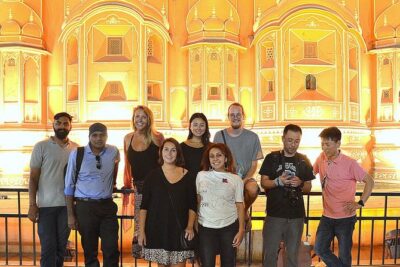
Browse the lists this tour appears in