
Reviewed · JAIPUR HERITAGE WALKING TOURS
Heritage Culture and History Walking Tour in Jaipur
Jaipur’s story comes together on foot. This tour links the precise instruments of Jantar Mantar, royal City Palace, active Hindu temples, old markets, and the pink facade of Hawa Mahal in one compact route. I like the way it connects famous sights with ordinary streets, especially Chandi Ki Taksal, Johri Bazar, and Katla Purohit Ji Ka, where Jaipur feels lived-in rather than staged.
I also like the guide-led approach. Aditya, Ankit, and Richi are named among the guide team, and the strongest praise goes to their clear English, easy manner, and ability to adjust the talk to your interests. The main consideration is cost beyond the $20 tour fee: entering every paid sight can add 1,600 INR, and the walk includes several temples and busy market lanes.
What makes this Jaipur walk worth considering
- Jantar Mantar begins the story with astronomy, not just palace walls and photo stops.
- City Palace and Hawa Mahal are paired with working temples, giving you royal, religious, and everyday views of Jaipur.
- The market route includes Chandi Ki Taksal, Johri Bazar, and Katla Purohit Ji Ka, with time to browse without a forced shopping program.
- The tour is private for your group, so the guide can focus on the subjects you care about.
- Sargasooli Tower provides the finish, with city views and a strong final photo stop.
- Water and an English or Spanish written guide are included, but admission tickets are not.
A compact route through Jaipur’s old center

This is a two-hour-25-minute walking tour, though the listed stop times add up to less than the full duration. That is useful to know. The remaining time is spent walking between sights, crossing market streets, pausing for explanations, and moving through the city at a human pace.
The route begins at Jantar Mantar and ends at Isarlat Sargasooli. It is not a bus tour with long transfers between disconnected monuments. You stay in Jaipur’s historic center, shifting from one kind of place to another: scientific, royal, religious, commercial, and architectural.
I would choose this early in a Jaipur visit. The guide can help you understand the city before you return to the same markets and monuments on your own. It also gives you a useful sense of direction around the City Palace, Hawa Mahal, Johri Bazar, and Gangori Bazaar area.
The experience is described as a private activity, so only your group participates. That matters if you want to ask many questions or pause on a subject such as Hindu worship, Jaipur’s royal family, or the design of the old city. Group discounts are available, and a mobile ticket makes meeting at the start simpler.
More heritage walks in Jaipur:
- Jaipur Bazaar & Food Walking Tour
★ 5.0 · 281 reviews - Heritage Walk & Street Food Tasting in Jaipur
★ 5.0 · 158 reviews - Jaipur Heritage Walking Tour – Local life, Havelis and Temples
★ 5.0 · 72 reviews
Jantar Mantar: Jaipur’s sky made into stone
The first stop is Jantar Mantar, where you meet the guide at the ticket counter. Raja Sawai Jai Singh II created this remarkable collection of astronomical instruments to measure time and study the movement of the heavens.
The stop lasts about 20 minutes, and the admission fee is not included. The listed price is 200 INR. That extra cost is reasonable if astronomy, science, or architecture interests you, but you should know that the visit is brief. You are getting an introduction rather than a long, detailed examination of every instrument.
This is a smart place to begin because it gives Jaipur a wider frame. The city is not only about palaces, elephants, colorful cloth, and ornate facades. It also reflects a ruler’s interest in mathematics, calendars, and careful observation. Ask the guide to explain how the instruments worked and why such large structures were needed.
The guide’s role matters here. The shapes can look abstract if you walk through without context. With a good explanation, the stone and plaster forms become practical tools rather than unusual monuments.
City Palace: royal Jaipur in a short visit

From Jantar Mantar, you walk to City Palace. The tour spends about 20 minutes here, with admission listed separately at 1,000 INR.
That is a significant extra charge compared with the $20 tour price, so think about what you want from the visit. If you already plan to explore City Palace at length, this short guided stop can work as an orientation. You get the setting, the royal stories, and the architectural details before deciding how much more time to spend there.
The guide explains the royal family and the palace’s design, helping you see the complex as more than a polished collection of courtyards and decorative walls. You can ask about how the palace functioned and how Jaipur’s rulers shaped the city around it.
The time limit is the drawback. Twenty minutes is enough to hear the main story and see selected areas, but not enough for a slow visit to every courtyard, gallery, or display. If City Palace is one of your main Jaipur goals, treat this stop as a guided introduction, not a full museum visit.
Govind Devji Temple and the meaning of aarti
The next stop is Govind Devji Temple, where you can see an aarti ceremony and experience the calm of an active sacred place. The visit is planned for about 20 minutes, and the admission cost is not listed as an additional charge.
This is one of the tour’s most useful changes of pace. After the grand scale of the astronomical instruments and palace complex, you enter a place connected to living worship. The guide can explain the religious setting and help you understand what you are seeing without turning the ceremony into a performance for outsiders.
Aarti is a ritual involving light and devotion. Timing matters, since the ceremony may shape what you experience during this part of the walk. The tour description specifically includes the chance to witness it, but it does not promise a particular ceremony time, so ask your guide at the start if this is important to you.
Dress and behavior should be respectful at every temple. Follow local instructions about shoes, photography, and where to stand. The stop is short, but it can be one of the more memorable parts of the route because it shows Jaipur as a place of faith, not just a collection of monuments.
More history-led tours in Jaipur:
- Private Full-Day Sightseeing Tour of Jaipur’s Heritage by Car
★ 5.0 · 110 reviews - Jaipur Heritage Evening Walk – The Twilight Magic of Pink City
★ 5.0 · 93 reviews - Nahargarh Water Walk – Guided 2-Hour Heritage Tour in Jaipur
★ 5.0 · 89 reviews - Jaipur@Twilight Guided Heritage City walk tour with Food Tasting
★ 5.0 · 67 reviews
Chandi Ki Taksal: an old bazaar without a sales pitch
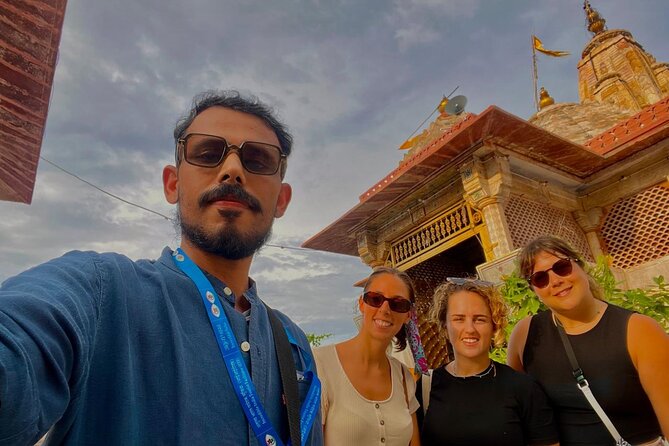
The walk then enters Chandi Ki Taksal, a local bazaar dating to the 17th century. The aim is to experience the area, not to push you into buying anything. You can browse at your own pace and choose to purchase something only if you want to.
This distinction matters. Many city walks through markets quietly turn into shopping trips. Here, the market is part of the history and daily life of Jaipur. Narrow lanes, shops, signs, and the movement of local business give you a better idea of how the old center works.
You may find this section less comfortable than a quiet monument. Market lanes can be crowded and visually busy, and the walking surface may require attention. Keep your belongings close and stay aware of the group while listening.
I like this part because it gives the tour texture. A palace can explain how a ruling family lived. A market helps explain how a city functions day to day.
Mandir Shri Ram Chandra Ji: a quiet architectural pause
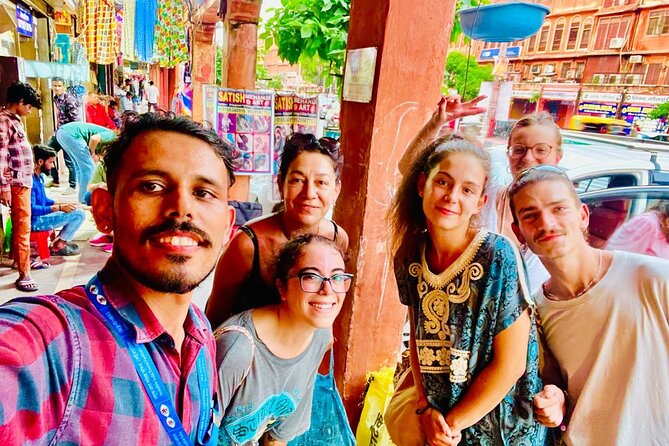
Mandir Shri Ram Chandra Ji is a temple dedicated to Lord Rama. The planned visit is about 20 minutes, with admission free.
The stop offers another chance to look at religious architecture without rushing straight from one famous landmark to the next. You can take in the design, the calm atmosphere, and the place’s importance in Hindu culture while the guide explains its spiritual setting.
This temple also adds balance to the route. Govind Devji introduces one form of worship and aarti, while Mandir Shri Ram Chandra Ji gives you time to consider the broader role of temples in Jaipur’s neighborhoods. The tour is not only about monumental buildings. It shows how religious spaces remain part of the city’s everyday rhythm.
As with the other temples, respectful conduct is essential. The tour details do not specify photography rules, so ask before taking pictures.
Hawa Mahal from the street

The walk continues to Hawa Mahal, Jaipur’s famous Palace of Winds. You spend about 15 minutes here, and the plan is to view the facade from outside rather than enter the building. The listed entry fee of 200 INR applies only if you decide to go inside separately.
This is an important point when comparing tours. You get the guide’s explanation of the facade, its design, and its place in Jaipur’s story, but you do not receive an interior visit as part of this experience. If you want photographs of the pink honeycomb front and a quick explanation, the stop should suit you.
The short visit also keeps the overall route moving. Hawa Mahal is one of Jaipur’s essential sights, but it can easily consume extra time if you want to explore the interior. The guide may help you understand what you are seeing before you return later for a longer visit.
I would not book this walk expecting full entry to every major monument. Its strength is the connection among many places. You see Hawa Mahal as one chapter in a larger city story.
Mandir Shree Laxminarayan Ji and the old markets

Mandir Shree Laxminarayan Ji is dedicated to Lord Vishnu and Goddess Laxmi. The tour allows about 25 minutes here, and entry is free.
This is the longest temple stop on the route. You have time to appreciate the architecture, the quiet setting, and the temple’s place in Hindu culture. The guide can help connect the figures and traditions you encounter here with the religious themes introduced earlier.
After the temple, the walk heads toward Johri Bazar. This market is known for jewelry and handicrafts, and it gives you another look at Jaipur’s long commercial tradition. The streets are a good place to notice color, shopfronts, craft work, and the practical side of the old city.
The route also passes through Katla Purohit Ji Ka, a historic market with narrow lanes. These areas are included for atmosphere and local context, not as a required shopping stop. That makes the experience better for people who want to look, listen, and learn without pressure to buy.
Still, allow for the reality of markets. You may need to slow down, watch your footing, and keep track of your companions. If shopping is your main goal, the fixed tour time may feel short. If you want a guided introduction before returning independently, it works well.
One review description also mentions a stop for ice cream, including a first kulfi experience for one guest. That is not presented as a guaranteed part of the route, so treat it as a possible informal pause rather than a promised inclusion.
Sargasooli Tower: finish with a city view
The final stop is Isarlat Sargasooli, also called Sargasooli Tower. The visit lasts about 10 minutes, and the admission fee is listed as 200 INR.
The tower dates to the 18th century and offers panoramic views of Jaipur. It is a fitting ending because the walk has taken you through details at street level, and the final stop lets you look back across the city from above.
Ten minutes is brief, but the viewpoint gives the tour a clear finish. Bring your camera if you enjoy city photographs. The meeting information places the end near Aatish Market and Gangori Bazaar, so you finish in an area with public transport nearby.
The tower entry fee is another cost to remember. If you enter Jantar Mantar, City Palace, Hawa Mahal, and Sargasooli Tower, the listed admission charges total 1,600 INR. Add that to the $20 tour price when working out your actual budget.
What the guides add to the walk
The best reason to book this experience is the guide’s ability to join the pieces together. The guide team includes Aditya, Ankit, and Richi, and the strongest feedback centers on their English, friendliness, clear explanations, and passion for Jaipur.
One guide is described as a PhD student who could answer detailed questions. That suggests the conversation can go beyond memorized dates, especially if you want to ask about religion, architecture, astronomy, or local life. Another guide is praised for using personal academic work to add depth to the city’s stories.
You should still tell the guide what interests you. The experience is private, and the guide can focus more on the subjects you care about. Ask for extra context at the palace if royal history matters to you. Ask for help understanding temple customs if this is your first visit to India. Ask for market advice if you want to browse without turning the walk into a shopping trip.
The language support is English and Spanish, and a written guide in those languages is included. A water bottle is also provided, a small but useful touch during a walking route.
Price, pace, and who will enjoy it
At $20, this is a good value if you want an organized introduction to Jaipur’s old center and plan to ask questions. The price covers the guide, the private format, the walking route, water, and the written guide. It does not cover the four listed entry fees.
The value is strongest for first-time visitors, history fans, people interested in religion and architecture, and families who prefer stories to a long formal lecture. Children may enjoy the astronomical instruments, towers, markets, and tales of royal Jaipur, though the route includes several temple visits and concentrated explanations.
The pace is active but manageable for most people who can take part in a city walking tour. The stop times are short, and you will spend much of the experience moving between places. Wear comfortable shoes, carry sun protection, and bring water beyond the included bottle if needed.
The tour is not ideal if you want extended time inside City Palace, Hawa Mahal, or Jantar Mantar. It is also not the best choice if you dislike market lanes, religious sites, or a route with several quick stops. For a broad first look at central Jaipur, though, the range is impressive.
Cancellation is free up to 24 hours before the start time for a full refund. Changes or cancellations made less than 24 hours before the start are not accepted for a refund.
Should you book this Jaipur walking tour?
I would book it if you want Jaipur explained through several different lenses: science at Jantar Mantar, royal life at City Palace, worship in three temples, trade in old bazaars, and city views from Sargasooli Tower.
The tour earns its $20 price through the guide and the route, not through included monument entry. Budget another 1,600 INR if you plan to enter every paid stop. If your priority is a long, detailed visit inside the palace or Hawa Mahal, choose a more focused tour. If you want a friendly, flexible introduction with Aditya, Ankit, Richi, or another guide from the team, this is a strong way to get oriented in Jaipur.
FAQ
How long does the Jaipur walking tour last?
The experience lasts approximately 2 hours and 25 minutes.
Where does the tour begin?
The tour begins at the ticket counter at Jantar Mantar in Jaipur.
Where does the tour end?
It ends at Isarlat Sargasooli, also called Sargasooli Tower, near Aatish Market and Gangori Bazaar.
Is the tour private?
Yes. Only your group participates in the activity.
Are admission tickets included?
No. Admission is not included for Jantar Mantar, City Palace, Hawa Mahal, or Isarlat Sargasooli.
How much are the listed admission fees?
Jantar Mantar is 200 INR, City Palace is 1,000 INR, Hawa Mahal is 200 INR, and Isarlat Sargasooli is 200 INR.
Does the tour enter Hawa Mahal?
No. The tour views Hawa Mahal from outside and explains its facade and history. Entry is not included.
What is included in the tour price?
A water bottle and an English and Spanish written guide are included.
Can I cancel for a full refund?
Yes, if you cancel at least 24 hours before the experience start time. Cancellations or changes made less than 24 hours before the start are not refunded or accepted.
Newest Jaipur trips we have written up
- Culture walking and food tour with guide in Jaipur.★ 5.0 · 5 reviews
- Jaipur Private Tour 2 Days with Car & Guide★ 5.0 · 13 reviews
- From Jaipur Private Taj Mahal & Agra Fort Tour with Delhi Drop★ 4.5 · 9 reviews
- Two days Jaipur tour with guide by private car.★ 5.0 · 13 reviews
- Jaipur Full Day Private Tour★ 5.0 · 6 reviews
- Explore Jaipur on a Motorbike – A Unique Experience★ 4.5 · 5 reviews
- Vintage Walk Amer★ 5.0 · 11 reviews
- Walking Tour of Pink City (World Heritage Site) with Local Guide★ 5.0 · 7 reviews
Jaipur Heritage Walking Tours, compared.

Jaipur Heritage Walking Tour – Local life, Havelis and Temples
Read our review →


Private Half Day Food and Walking Tour of Jaipur
Read our review →

Browse the lists this tour appears in