
Reviewed · JAIPUR HERITAGE WALKING TOURS
Culture and Heritage Walk | Pink City Jaipur
Jaipur’s old city makes the most sense on foot. This walk takes you from the picture-perfect front of Hawa Mahal into the markets, food shops, temples, and side streets that give the Pink City its daily rhythm. I like the focus on local products and long-running food stalls, and I like that the small group is capped at 10 people. The main limitation is that Hawa Mahal is viewed only from outside, and the exact food stops or guide may vary.
I especially like the way the walk connects Jaipur’s grand architecture with ordinary city life. Bapu Bazar, Tripolia Bazar, and Johri Bazaar are not just photo stops: they show what Jaipur makes, sells, wears, and uses for worship. You should also expect a fair amount of walking, uneven city streets, and a tour that can feel longer than the advertised three hours if conversations and food stops run late.
Key points to know before booking
- Hawa Mahal is an outside photo stop: You get a short history lesson and pictures, but no interior visit.
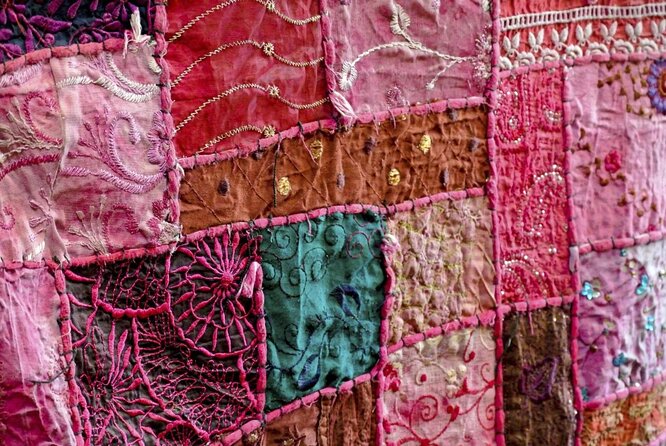
- The markets are the heart of the walk: Bapu Bazar, Tripolia Bazar, and Johri Bazaar reveal Jaipur’s crafts, jewelry, metalwork, and daily trade.
- Food is part of the experience: The walk includes famous snacks and sweets, with food stalls and shops that have served the city for decades.
- The route reaches beyond the main sights: Guides such as Deepak, Ayush, and Aayush have led people into quieter lanes and less obvious local places.
- Small groups help: A maximum of 10 people makes it easier to hear stories and ask questions.
- The price is modest: At $20 per person, it offers good value if you want orientation, local context, and food suggestions in one outing.
Why this walk makes sense early in a Jaipur stay
Jaipur’s Pink City can look simple on a map. In practice, its streets are packed with shops, shrines, workshops, food counters, courtyards, and traffic. A short walk with someone who knows the area helps you understand what you are seeing before you tackle the city on your own.
I would put this tour near the start of a Jaipur visit. You get a quick introduction to the old city’s main markets, hear stories that are easy to miss in guidebooks, and learn which local goods and snacks matter. Afterward, you can return to the bazaars with more confidence and a better sense of direction.
The walk is not built around entering a string of paid monuments. That is important. You are paying for interpretation, access to local corners, food knowledge, and the guide’s ability to connect small details. If you want a full tour of Jaipur’s palaces, this is not the right choice. If you want to understand how the old city works, it is a useful addition.
More heritage walks in Jaipur:
- Jaipur Bazaar & Food Walking Tour
★ 5.0 · 281 reviews - Heritage Walk & Street Food Tasting in Jaipur
★ 5.0 · 158 reviews - Jaipur Heritage Walking Tour – Local life, Havelis and Temples
★ 5.0 · 72 reviews
Starting near Golcha Cinema and New Gate
The meeting point is at Golcha Cinema on Chaura Rasta Road, near New Gate and Bapu Bazar. The tour ends back at the same meeting point, so you do not need to arrange a ride from a distant part of town at the finish.
The start is close to public transportation, which helps if you are staying outside the Pink City. Still, Jaipur’s old city can be busy, so allow time to reach the meeting point. Bring the booking confirmation on your phone, since the ticket is mobile.
The group size is limited to 10 people. That is small enough for a guide to answer individual questions without turning the walk into a private tour. It also matters in crowded market lanes, where a large group would be harder to keep together.
Hawa Mahal: a five-minute introduction from the street
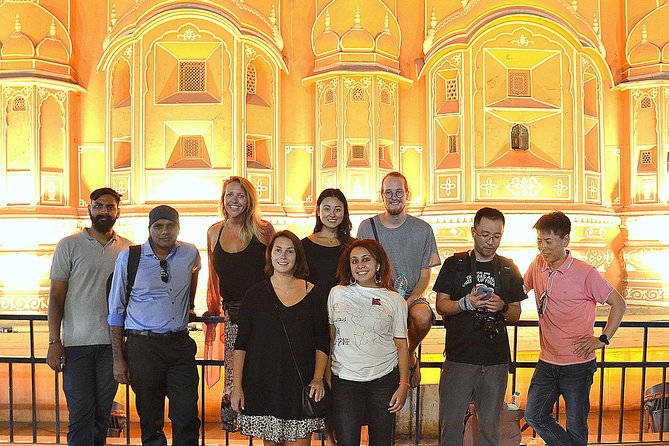
The walk begins with Hawa Mahal, Jaipur’s famous Palace of Wind. You see it from the outside, stop for photographs, and hear a short explanation of its past. The scheduled stop is only about five minutes, so think of this as an orientation rather than a palace visit.
That short stop is both a strength and a limitation. The facade is one of Jaipur’s essential sights, and an outside explanation gives you useful context without spending much of the walk on a monument you may already plan to visit separately. On the other hand, if you want time to study the building or enter it, you will need to return independently.
The best part of this opening is the transition that follows. Instead of lingering only at the famous facade, the guide takes you toward the markets and streets where the city’s heritage is still in use. The tour shifts quickly from a landmark to the people and trades around it.
Bapu Bazar: Jaipur products in everyday use
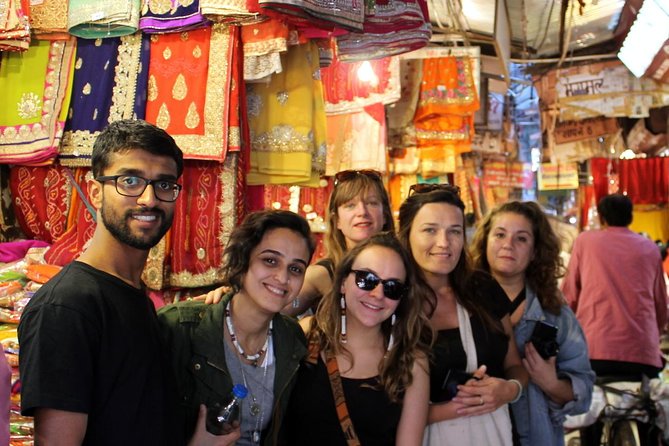
Bapu Bazar is the first market stop, with about 15 minutes devoted to products and art associated with Jaipur and nearby villages. This is where the walk begins to feel less like a sightseeing circuit and more like a lesson in local commerce.
You may see goods connected with village production, traditional design, and the crafts for which the region is known. The guide’s role is especially useful here because a market can otherwise blur into a row of colorful shops. You learn what is made locally, what comes from nearby areas, and what is worth noticing.
I like this part for practical reasons. It gives you a way to judge later shopping stops, and it shows that Jaipur’s culture is not confined to royal buildings. The market is a working place, not a museum display. You can look, ask questions, and decide for yourself if you want to buy anything.
The stop is brief, so do not expect a long shopping session. The emphasis is on seeing and understanding the goods rather than making a purchase. If you want time to bargain or compare textiles and souvenirs, return after the walk.
More Jaipur sightseeing tours:
- Jaipur: Private Full Day Sightseeing Tour By Car with Guide
★ 4.9 · 1,839 reviews - 3-Hour Morning Bike Tour of Jaipur
★ 5.0 · 1,253 reviews - Jaipur: Private Sightseeing Day Tour with Guide by Car
★ 4.8 · 773 reviews - Jaipur: Full-Day City Tour with Car, Guide & Skip-the-Line
★ 4.8 · 512 reviews
Tripolia Bazar: metalwork, utensils, and devotional objects
Tripolia Bazar is next to Hawa Mahal and is known for antiques, utensils, locks, and metal items used in worship. This gives the route a different character from Bapu Bazar. Instead of focusing mainly on decorative goods, you get a glimpse of objects tied to homes, trades, and religious practice.
The details matter here. A lock or brass utensil may seem ordinary at first, but the guide can explain why certain items are sold in this part of the city and how they connect with local customs. The mention of metal products used to worship Hindu gods also shows how commerce and religion overlap in Jaipur’s old streets.
Again, the planned stop is around 15 minutes. That is enough for a focused explanation and a look around, but not enough for an unhurried browse through every lane. Wear shoes you can walk in comfortably, and keep your attention on the group. Market streets can be crowded and distracting.
This is one of the stops that gives the walk its local flavor. You are not simply collecting photographs of palaces. You are seeing the practical objects that support daily life and religious traditions.
Johri Bazaar: jewelry and the trading identity of Jaipur
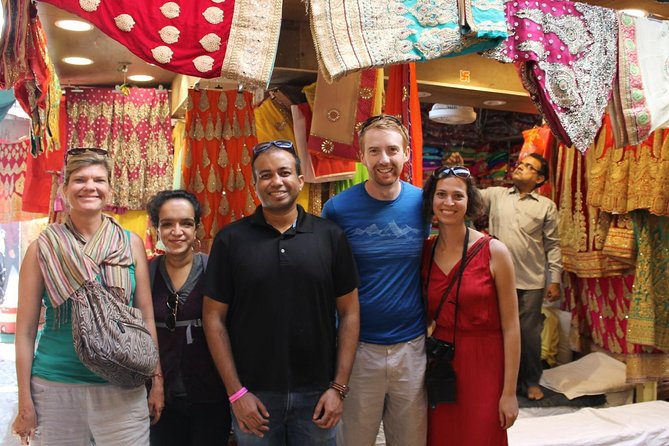
Johri Bazaar is the final named market stop and one of the most important commercial areas in the Pink City. Jewelry has been a major part of Jaipur’s economy, and this market has a history of roughly 150 years.
The stop helps explain why Jaipur became known for jewelry and gem work. Even if you are not shopping, the market offers a useful look at one of the city’s oldest trades. Your guide can help you read the street as a place of business rather than simply a colorful backdrop.
You should be clear about what this tour does and does not promise. It introduces you to the market and its role in Jaipur. It is not described as a specialist jewelry-buying consultation, and there is no guarantee that you will purchase a particular stone or piece. If you are considering an expensive purchase, take your time and seek independent advice.
I like Johri Bazaar as the closing market stop because it brings together several themes from the walk: craft, commerce, tradition, and Jaipur’s connection with royal-era culture. It also leaves you in a useful area for further exploring after the tour.
Food stops, sweets, tea, and the taste of the old city
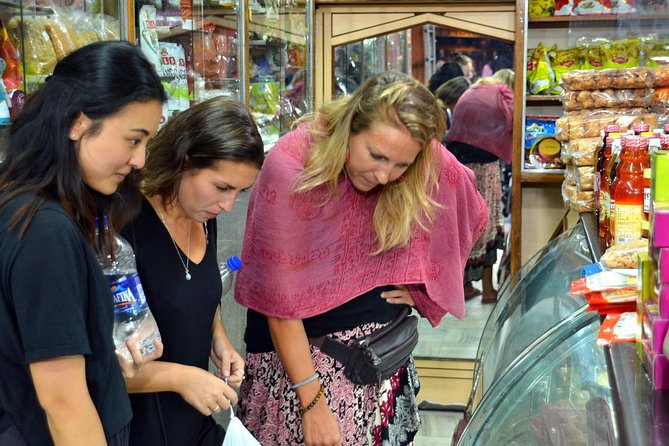
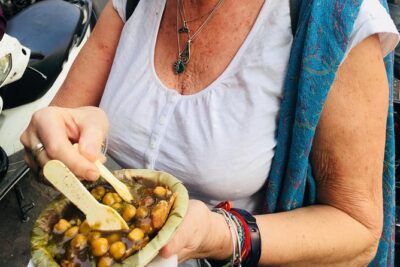
Food is one of the strongest reasons to choose this walk. The tour centers on snacks and sweets from famous old shops, including food stalls that have reportedly been operating for more than 50 years. The exact tasting sequence is not specified, so you should not book it expecting a fixed menu.
That flexibility can be a plus. A local guide can point you toward what is being served that day and explain which sweets or snacks are closely tied to Jaipur. The experience may include small bites, tea, or stops at traditional food places. Some outings have also included rooftop views and local tea drinking, but you should treat those as possible elements rather than guaranteed stops.
I would eat lightly before starting. You want room to sample food, and the walk is designed to include tastes along the way. If you have allergies, dietary restrictions, or a sensitive stomach, tell the guide before eating. The supplied information does not promise a special food menu or alternatives.
The food component also makes the tour more useful than a standard market walk. You leave with ideas for what to try later, and you get a sense of how Jaipur’s old city is experienced through taste as well as architecture.
Stories, side streets, and the guide’s local knowledge
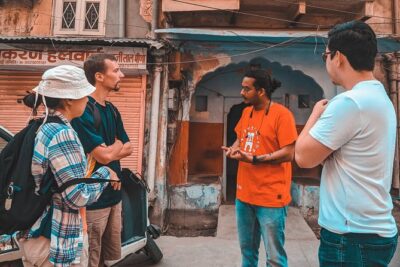
The most praised part of this experience is the guide’s ability to add small details that you would probably miss alone. Guides named Deepak, Ayush, and Aayush have led versions of this walk, and the descriptions of their approach emphasize city stories, curious facts, local food, and less obvious streets.
The route may take you into quiet lanes, small streets, and places you might not confidently enter by yourself. That does not mean every corner is a secret attraction. It means the guide provides a social bridge between you and the old city, helping you understand places that are easy to pass without context.
The experience is also described as friendly and conversational. That matters on a three-hour walk. You are not expected to stand silently while someone recites dates. The guide may encourage the group to talk, ask questions, and compare impressions.
The listing describes the guide as female, while several available accounts name male guides including Deepak, Ayush, and Aayush. Since guide assignments can change, book this for the route and subject rather than for a guaranteed individual guide or gender.
Pace, comfort, and what to carry
The walk lasts about three hours and involves markets, lanes, food stops, and photo pauses. That is long enough to give you a real introduction, but short enough to fit around other Jaipur plans.
Comfortable footwear is important. The supplied details do not specify the condition of every street, but a market walk through the old city naturally means standing, walking, and moving through crowded areas. Carry water, keep your phone charged for the mobile ticket, and bring a small amount of room in your schedule in case the walk runs a little over.
The experience requires good weather. If poor weather forces cancellation, you are offered another date or a full refund. The tour also requires a minimum number of participants, so a cancellation for that reason brings the same choice of another date or a refund.
Most people can participate, and the tour is near public transportation. No special accessibility details are provided, so contact the operator before booking if you need specific support.
Is $20 good value for Jaipur?
At $20 per person, I consider this good value for a first look at the Pink City, especially if you are traveling independently. The price includes about three hours with a local guide, a planned route through four significant areas, market interpretation, food orientation, and the convenience of ending where you began.
The value is strongest if you would otherwise wander without knowing what you are seeing. A self-guided walk costs less, of course, but it may not lead you to the same local food shops or quieter lanes. You also lose the chance to ask why a certain market sells particular goods or how a trade fits into Jaipur’s past.
The price is less compelling if you want palace admissions, a private vehicle, or a detailed shopping service. Those are not part of the experience. The tour is about walking and context, not luxury transport or major monument entry.
With a maximum of 10 people, the cost also buys a more personal setting than a large coach excursion. That is a sensible trade for visitors who want questions answered and prefer a relaxed pace.
Who should book this Pink City walk?
I would recommend it to first-time visitors who want a clear introduction to Jaipur’s old city. It also suits solo visitors and couples who want company while exploring local markets, and food-focused visitors who would like help finding traditional snacks and sweets.
It is a good fit if you enjoy stories, architecture, shopping districts, and everyday life in the same outing. The walk also works well for people who have already seen Jaipur’s main monuments and now want a closer look at the city around them.
I would skip it if your priority is entering Hawa Mahal or visiting several major palaces in one morning. I would also think twice if three hours of walking and market streets sound tiring. The tour’s appeal comes from being on foot and close to the city, so that is not a minor detail.
Final verdict: book it for context, not monument entry
Book the Culture and Heritage Walk if you want Jaipur explained through its streets, markets, food, and working traditions. The route is affordable, the group is small, and the combination of Hawa Mahal, Bapu Bazar, Tripolia Bazar, Johri Bazaar, snacks, and local stories gives you a useful first day in the Pink City.
Just keep your expectations precise. You will see Hawa Mahal from outside, the food stops can vary, and the guide may not be the person you expected. For $20, though, this is a practical way to get oriented, eat a few local specialties, and find parts of Jaipur you might otherwise walk past.
FAQ
Where does the Culture and Heritage Walk begin?
The tour begins at Golcha Cinema on Chaura Rasta Road, near New Gate and Bapu Bazar in Jaipur’s Pink City.
Where does the walking tour end?
The activity ends back at the same meeting point where it begins.
How long does the tour last?
The walk lasts approximately three hours.
Is Hawa Mahal included as an interior visit?
No. Hawa Mahal is viewed from the outside, with time for photographs and a short history explanation.
Which markets are included?
The named market stops are Bapu Bazar, Tripolia Bazar, and Johri Bazaar.
Does the tour include food?
The experience focuses on famous snacks and sweets from traditional shops and food stalls. The exact food stops and items are not specified.
How many people can join the tour?
The activity has a maximum of 10 participants.
Is the tour available with a mobile ticket?
Yes. Confirmation is provided at booking, and the activity accepts a mobile ticket.
Can I cancel for a full refund?
Yes, if you cancel at least 24 hours before the local start time. Cancellations made less than 24 hours in advance are not refunded.
More history-led tours in Jaipur
- Private Full-Day Sightseeing Tour of Jaipur’s Heritage by Car
★ 5.0 · 110 reviews - Jaipur Heritage Evening Walk – The Twilight Magic of Pink City
★ 5.0 · 93 reviews - Nahargarh Water Walk – Guided 2-Hour Heritage Tour in Jaipur
★ 5.0 · 89 reviews - Jaipur@Twilight Guided Heritage City walk tour with Food Tasting
★ 5.0 · 67 reviews
Newest Jaipur trips we have written up
- Culture walking and food tour with guide in Jaipur.★ 5.0 · 5 reviews
- Jaipur Private Tour 2 Days with Car & Guide★ 5.0 · 13 reviews
- From Jaipur Private Taj Mahal & Agra Fort Tour with Delhi Drop★ 4.5 · 9 reviews
- Two days Jaipur tour with guide by private car.★ 5.0 · 13 reviews
- Jaipur Full Day Private Tour★ 5.0 · 6 reviews
- Explore Jaipur on a Motorbike – A Unique Experience★ 4.5 · 5 reviews
- Vintage Walk Amer★ 5.0 · 11 reviews
- Walking Tour of Pink City (World Heritage Site) with Local Guide★ 5.0 · 7 reviews
Jaipur Heritage Walking Tours, compared.

Jaipur Heritage Walking Tour – Local life, Havelis and Temples
Read our review →
Private Half Day Food and Walking Tour of Jaipur
Read our review →
Heritage Culture and History Walking Tour in Jaipur
Read our review →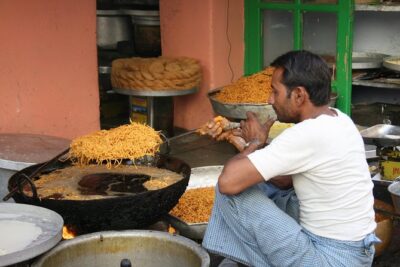
Browse the lists this tour appears in