
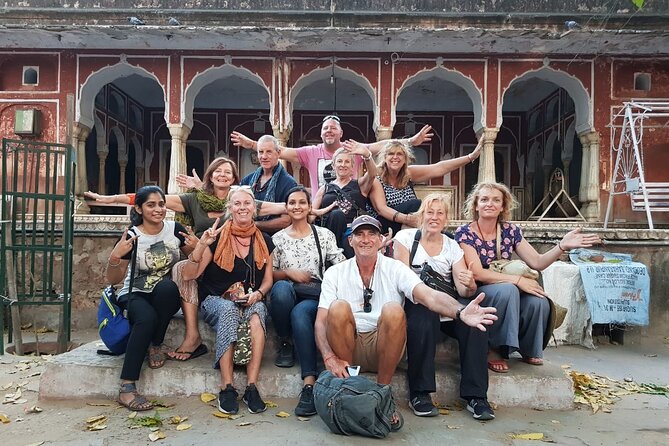
Reviewed · JAIPUR FOOD TOURS
Jaipur Heritage Walk – Artisans | Bazaars | Culinary | Temples (Awarded)
Jaipur’s old city makes the most sense on foot, where a broad ceremonial road can suddenly shrink into a lane filled with metal workers, spice sellers, flower vendors, and families practicing old crafts. This walk takes you behind the painted facades and into the working heart of the Pink City. I especially like the metal-beating workshops and the live bangle-making demonstration, two encounters you would be unlikely to get from a standard monument tour.
I also like the way the route mixes daily life with Jaipur’s grand plan. You learn about the city’s seven gates and geometric street layout, then taste local sweets and masala chai while moving through a bridal market and flower market. Guides named Nidhi and Ani have led this experience, and the strongest reports praise their gentle pacing and storytelling.
The main drawback is that this is a walking tour through narrow, active market lanes, not a sightseeing bus ride with long stops at major monuments. You will not receive admission to a palace or fort, and the two-and-a-half-hour schedule can feel short if you want extended shopping or detailed time at every workshop.
Key points at a glance
- See Jaipur’s working crafts: Watch metal beating and traditional bangle making by local artisans.
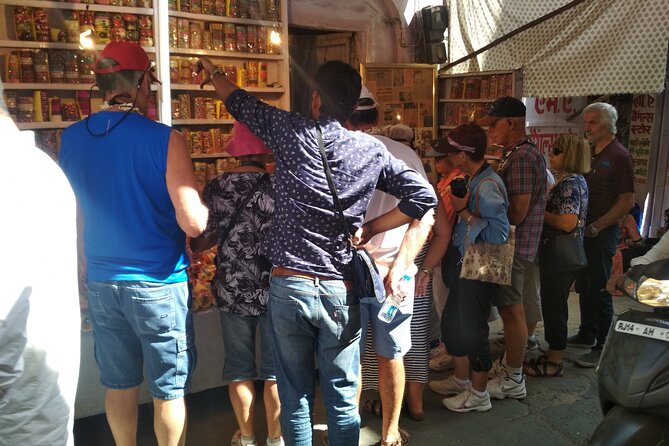
- Walk the bridal market: Sodhya Halwai offers a colorful look at traditional wedding clothing and a chance to try Mohanthal.
- Learn the city plan: Begin with Jaipur’s seven gates, walled-city layout, and royal approach roads.
- Taste along the way: Two local food tastings, packaged water, and a hot cup of masala chai are part of the experience.
- Finish at a flower market: The route ends near Choti Chaupar and Tripolia Bazaar, a useful area for continuing your own exploration.
- Small-group format: The maximum group size is 15, so the guide can usually speak with you and handle narrow lanes more easily.
Why Jaipur is best understood through its old-city lanes

Jaipur is often presented through a short list of grand sights: Amber Fort, the City Palace, Hawa Mahal, and Jantar Mantar. Those places matter, but they do not tell you how the old city works from morning to afternoon.
This walk focuses on the city as a living place. You pass markets that serve local families, workshops where practical goods are still made, and streets tied to royal Jaipur. The result is less about collecting postcard views and more about seeing how the walled city functions.
The city’s planned design gives the walk a useful backbone. Jaipur was laid out in a clear geometric pattern, with major roads and market areas arranged in defined sections. Your guide begins by explaining the importance of the seven gates, then shows how the streets, bazaars, and royal routes fit into that plan.
I like this approach because it gives you a map in your head. Afterward, places such as Bapu Bazar, Tripolia Bazaar, and Choti Chaupar are easier to understand. You are not simply wandering through a crowd of shops. You can see how the old city was organized and why particular trades gathered in particular lanes.
More food tours in Jaipur:
- Heritage Walk & Street Food Tasting in Jaipur
★ 5.0 · 158 reviews - Cultural Walk and Food Tasting In Jaipur
★ 5.0 · 118 reviews - Guided Morning Bicycle Tour with Food Tasting in Jaipur
★ 5.0 · 117 reviews
Starting at Golcha Cinema and the seven gates
The meeting point is Golcha Cinema on Chaura Rasta Road near New Gate and Bapu Bazar. This is a practical starting point in the Pink City, though you should allow time to find the exact spot in the busy old-city setting.
The first section covers Jaipur’s seven gates and the purpose of the walled city. That opening lesson matters because the route is not just a collection of markets. It explains the relationship between the city’s defensive walls, commercial streets, and royal areas.
You also visit a local priest family living in a heritage mansion. This adds a domestic note to the history. Instead of seeing only official buildings, you get a sense of how an older home is used by a family today.
The stop is scheduled for about 15 minutes, so expect an introduction rather than a long architectural inspection. If you are hoping for detailed palace interiors, this will not replace a visit to the City Palace. It does, however, set up the social and historical theme of the rest of the walk.
Metal beaters, snack markets, and narrow back streets
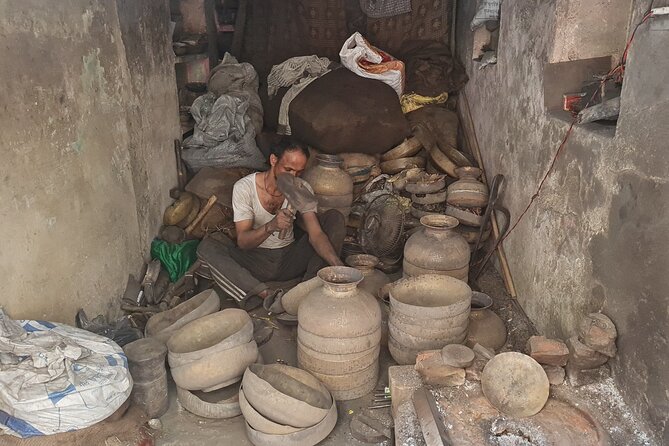
The next part is the most distinctive section for many people. You leave the wider roads and enter narrow lanes where local work happens close to home.
One stop introduces you to a community of metal beaters. The sound and physical effort of the work help explain why artisan neighborhoods are different from ordinary shopping streets. This is not a museum demonstration designed only for tourists. You see a traditional trade practiced by local families across generations.
The route also reaches a wholesale market connected with pani puri, the popular Indian snack. Wholesale markets can be more revealing than polished food streets because you see the supply side of city life. The guide can explain the food and its place in Jaipur’s daily routine while you watch the market operate around you.
An Ayurveda center is included as another window into local practice. The tour does not promise a treatment or extended consultation, so think of this as a brief cultural stop rather than a wellness appointment.
You also walk through heritage lanes associated with a visit by Prince Charles. That detail gives the lanes a link to Jaipur’s public past, but the real interest is their ordinary use today. The best moments here are likely to be small: a shop opening, a family workshop, a quick exchange with a vendor, or the way a narrow lane opens into a larger market.
The schedule allows about 45 minutes for this section. That is enough to see several different places, but not enough to linger at every one. If you enjoy taking photographs, you may want to ask the guide early about pauses. One guide praised in the supplied feedback, Nidhi, was noted for allowing time for pictures and shopping while keeping the group moving.
The royal gate and Jaipur’s ceremonial side
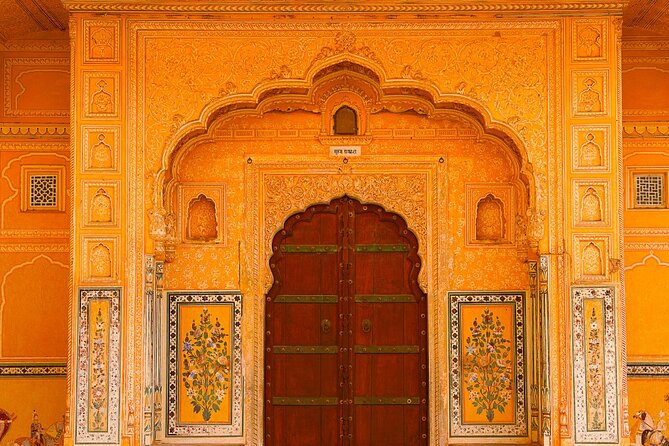
At some point after the back-lane section, you pass a large heritage gate that also serves as an entrance to the Jaipur royal family’s residence. This is a useful change of scale.
The route shifts from family workshops and small lanes to the formal side of Jaipur. The gate reflects the city’s connection to the ruling household and the way royal roads were integrated into the planned old city.
Do not expect entry into the royal residence. Monument visits are not included, and the attraction here is the exterior setting and the story attached to it. The guide’s explanation is important because a gate can be easy to pass without understanding its role.
More heritage walks in Jaipur:
- Jaipur Bazaar & Food Walking Tour
★ 5.0 · 281 reviews - Jaipur Heritage Walking Tour – Local life, Havelis and Temples
★ 5.0 · 72 reviews - Food Walking Tour in Jaipur
★ 5.0 · 71 reviews - Jaipur Heritage Walking Tour
★ 4.5 · 31 reviews
Sodhya Halwai and Jaipur’s bridal shopping street
The Sodhya Halwai stop brings you into one of the most colorful parts of the walk: Jaipur’s bridal market. Traditional Indian wedding clothing fills the shops, and you may see brides or families choosing garments for ceremonies.
This is a good stop for understanding that Jaipur’s bazaars are not arranged only for sightseeing. They remain useful shopping districts for local people. Wedding clothing, jewelry, sweets, and household goods all connect to the city’s social calendar.
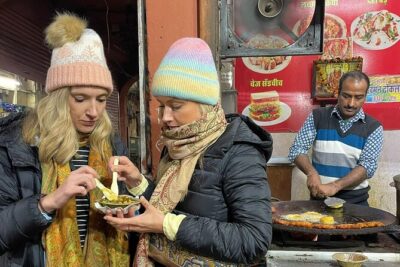
You also try Mohanthal, a local sweet. The tour includes two local food-tasting opportunities, and this is one of the named examples. The portion and exact food may depend on the day, but you should expect a taste rather than a full meal.
The scheduled time is about 15 minutes. That is enough for a quick look and a sample, but shoppers may want to return later on their own. If you are considering buying clothing, ask your guide for practical advice before committing to a purchase. The walk is designed to introduce you to the market, not to provide a long shopping appointment.
Maniharo Ka Rasta and the wax bangle craft
Maniharo Ka Rasta is one of the strongest reasons to choose this tour. This lane is associated with bangle-making artisans, and you watch a live demonstration using sealing wax to create traditional wrist bangles.
The value here is the direct connection between finished product and working hand. In a shop, a bangle is simply something on a shelf. In the workshop, you see the material being shaped and understand why the craft belongs to a specific lane and community.
The stop lasts about 15 minutes. That is brief, but it keeps the walk varied and prevents the experience from turning into a long craft lecture. A local artisan souvenir is included, which gives you a small reminder of the visit without making the route feel like a compulsory shopping stop.
You should still keep your expectations sensible. A live demonstration is not the same as taking a full class, and the tour does not state that you can make your own bangle. The point is to watch, ask questions, and see a family craft in its working setting.
Tripolia Bazaar, flowers, spices, and Isarlat Sargasooli
The final major section takes you through Tripolia Bazaar. Here you pass Jaipur’s oldest flower market, a spice market, and Isarlat Sargasooli, one of the city’s tallest minarets.
This ending brings together several kinds of city life. Flowers connect to worship and ceremony. Spices connect to cooking and trade. The minaret adds a vertical landmark to streets that are otherwise experienced at eye level.
The route finishes at the flower market near Choti Chaupar. That is a useful ending point because you can continue exploring the old city from there instead of being dropped back at the beginning. The market area also gives you a natural chance to buy flowers, photograph the displays, or simply watch the morning trade if your tour takes place early.
The final section is scheduled for about 20 minutes. As with the other stops, it is an introduction rather than a full market tour. If you have a strong interest in spices or flowers, note the location and return later when you have more time.
Guides, pace, and the small-group advantage
The experience uses an English-speaking city explorer, and the supplied feedback identifies Nidhi and Ani as guides who have led this route. Nidhi is described as soft-spoken, patient with photographs, and good at explaining temple customs and back streets. Ani is noted for storytelling and for handling a family group that included an eight-year-old child.
Those details suggest the guiding style you should expect: personal, conversational, and focused on context rather than a rapid list of dates. The tour is capped at 15 people, which is important in Jaipur’s narrow lanes. A smaller group is easier to keep together and gives you a better chance to hear explanations near workshops and markets.
The pace has been described as neither rushed nor slow. That is the right balance for a route covering several different areas in about two and a half hours. Still, market walks involve stops, crossings, and uneven movement through active streets. Wear comfortable shoes, keep your belongings secure, and bring patience for traffic and crowded passages.
The tour information also says that most people can participate and that the route is near public transportation. Exact accessibility details are not provided, so anyone who needs a step-free route should confirm before booking.
Food, water, and what is not included
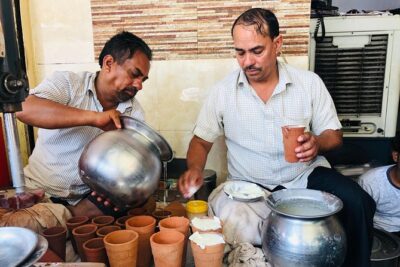
Packaged drinking water is included, along with two local food-tasting opportunities and an artisan souvenir. Mohanthal is specifically named, and masala chai is part of the experience described. These tastings add flavor to the walk without turning it into a full food tour.
You should eat something before or after if you need a substantial breakfast or lunch. Meals are not included unless specifically stated, and the experience does not promise a set restaurant meal. One account of a related morning experience included breakfast stops and a tuk-tuk ride, but you should not assume those extras are part of this particular walking route.
Transfers are also not included. You make your own way to Golcha Cinema and away from the flower market at Choti Chaupar. That arrangement keeps the price low and gives you freedom to continue exploring, but it means you should plan your transport around Jaipur’s old-city traffic.
Is $30.04 good value for two and a half hours?
At about $30.04 per person, this is not the cheapest way to walk through Jaipur, but it offers more than a basic orientation stroll. You are paying for a local guide, access to family-run craft settings, two tastings, drinking water, and a small artisan souvenir.
The value is strongest if you want interpretation. You could walk through Tripolia Bazaar or Bapu Bazar on your own, but you would probably miss the meaning of the seven gates, the artisan communities, the royal gate, and the connection between each market and Jaipur’s daily life.
The price is less compelling if your main goal is admission to major monuments. No palace, fort, or other monument visit is included. You would need to budget separately for those sights and arrange your own transport.
For a first morning or afternoon in Jaipur, I think the tour works well as a city introduction. It gives you enough orientation to make later independent exploring more rewarding.
Who should book this Jaipur heritage walk?
I would choose this experience if you want to see working Jaipur rather than only its famous facades. It suits first-time visitors who want a clear introduction to the old city, families who can manage a two-and-a-half-hour walk, and anyone interested in food, crafts, markets, and local customs.
It is also a good fit if you prefer a small group and a guide who can adjust the pace. The accounts associated with Nidhi and Ani suggest that the experience can work well for families and for people who like to stop for photographs.
I would think twice if you dislike narrow market lanes, street noise, or unplanned moments. This is not a polished museum route. You may encounter crowded passages, active workshops, and a schedule that leaves only short periods at each stop.
Book at least 24 hours ahead if you want the full cancellation option. You can cancel for a full refund up to 24 hours before the start time. The experience depends on good weather and a minimum number of participants, so a cancellation by the operator may result in another date or a full refund.
Should you book it?
Yes, if you want Jaipur explained through its people, trades, food, and market streets. The strongest parts are the metal-beating community, the bangle workshop, the bridal market, and the final flower market. The route also gives you a useful sense of how the planned Pink City fits together.
Skip it if you want a monument-heavy tour with palace interiors and long visits at major landmarks. For everyone else, this is a practical way to get your bearings, meet the everyday side of Jaipur, and finish near Choti Chaupar with plenty of old-city exploring still ahead.
FAQ
How long does the Jaipur Heritage Walk last?
The walk lasts approximately 2 hours and 30 minutes.
Where does the tour begin?
It begins at Golcha Cinema on Chaura Rasta Road near New Gate and Bapu Bazar in Jaipur’s Pink City.
Where does the tour end?
The route ends at the Flower Market near Choti Chaupar in Tripolia Bazaar.
What is included in the price?
The price includes packaged drinking water, an English-speaking city explorer, two local food-tasting opportunities, and a souvenir from local artisans.
Are monument entrance fees included?
No. Visits to monuments are not included unless specifically stated, and this experience does not include general monument admission.
How many people can join the tour?
The maximum group size is 15 participants.
Can I cancel for a full refund?
Yes. You can cancel up to 24 hours before the experience start time for a full refund. Cancellations or changes made less than 24 hours before the start time are not accepted for a refund.
More history-led tours in Jaipur
- Private Full-Day Sightseeing Tour of Jaipur’s Heritage by Car
★ 5.0 · 110 reviews - Jaipur Heritage Evening Walk – The Twilight Magic of Pink City
★ 5.0 · 93 reviews - Nahargarh Water Walk – Guided 2-Hour Heritage Tour in Jaipur
★ 5.0 · 89 reviews - Jaipur@Twilight Guided Heritage City walk tour with Food Tasting
★ 5.0 · 67 reviews
Newest Jaipur trips we have written up
- Jaipur Private Tour 2 Days with Car & Guide★ 5.0 · 13 reviews
- Culture walking and food tour with guide in Jaipur.★ 5.0 · 5 reviews
- From Jaipur Private Taj Mahal & Agra Fort Tour with Delhi Drop★ 4.5 · 9 reviews
- Two days Jaipur tour with guide by private car.★ 5.0 · 13 reviews
- Jaipur Full Day Private Tour★ 5.0 · 6 reviews
- Explore Jaipur on a Motorbike – A Unique Experience★ 4.5 · 5 reviews
- Vintage Walk Amer★ 5.0 · 11 reviews
- Walking Tour of Pink City (World Heritage Site) with Local Guide★ 5.0 · 7 reviews
Jaipur Food Tours, compared.
Jaipur@Twilight Guided Heritage City walk tour with Food Tasting
Read our review →
Guided Morning E-Rickshaw Ride with Food Tasting at Jaipur
Read our review →Browse the lists this tour appears in