
Reviewed · JAIPUR FOOD TOURS
Guided Morning Bicycle Tour with Food Tasting in Jaipur
Jaipur is at its most approachable early in the day, when the roads around the Pink City are calmer and the markets are beginning to stir. This private bicycle tour takes you past Hawa Mahal, old gates, flower sellers, food stalls, temples, and a brass-workers’ lane, with guide Umesh and a support escort keeping the ride moving safely.
I like the way the tour joins sightseeing with breakfast rather than treating food as an afterthought. I also like the family setup: tandem bicycles, a buckled infant seat, and e-rickshaw transport give you practical options if someone cannot pedal.
The main drawback is clear: you see the monuments only from outside. The ride also takes place on city streets, so anyone uneasy on a bicycle, or sensitive to heat, traffic, or uneven riding conditions, should use the e-rickshaw option.
Key points before you book
- Early access to Jaipur’s old city: Morning timing gives you a calmer look at roads, gardens, markets, and temples.
- Food is part of the route: Expect tea, potato and chili fritters, kachori, pakodas, jalebi, and a final kullhad lassi.
- Umesh leads the experience: He explains Jaipur’s culture, architecture, religion, food, and daily life while adding small surprises along the way.
- Family-friendly bike choices: Tandem bicycles, e-rickshaws, and a secure infant seat help mixed-age groups take part.
- Artisan contact at Thatheron ka Rasta: You can watch brass utensils being made by hand and try the process if you wish.
- Outside views only: This is a city ride and food walk on wheels, not a ticketed palace or museum tour.
Why a morning bicycle ride works so well in Jaipur
Jaipur can feel like a lot to take in from a car. You pass the streets quickly, stop only at major sights, and miss the small details between them. On a bicycle, you move slowly enough to notice painted walls, shopfronts, temple activity, vegetable sellers, flower stalls, and the changing rhythm of the old city.
This tour lasts about two and a half to three hours. That is long enough to connect several parts of Jaipur without taking up your whole day. You begin at Raj Mandir Cinema and finish back there, so you can plan a later palace visit, lunch, or rest without arranging a separate return ride.
The tour is private, meaning only your group takes part. That matters in Jaipur, where a fixed group pace can be awkward on narrow roads. Your guide can keep the ride suitable for your party, explain local customs as questions arise, and make use of the available e-rickshaw support when needed.
One bicycle captain leads the group, while an escort follows the last rider. Helmets and bottled water are included. The safety arrangement does not remove the normal demands of city cycling, but it gives the experience a more organized feel than simply hiring a bicycle and setting off alone.
More food tours in Jaipur:
- Heritage Walk & Street Food Tasting in Jaipur
★ 5.0 · 158 reviews - Cultural Walk and Food Tasting In Jaipur
★ 5.0 · 118 reviews - Food Tour and Eat like Locals
★ 5.0 · 111 reviews
Raj Mandir Cinema to Panch Batti
The starting point is Raj Mandir Cinema on Bhagwan Das Road, near Panch Batti in the C Scheme area. The cinema is known for its ornate, meringue-like interior and is described as Jaipur’s oldest movie theater. You do not receive an admission ticket, so the stop is mainly a quick exterior introduction and meeting point.
From there, the ride heads toward Panch Batti. This is a good early snapshot of Jaipur’s famous pink and terracotta color scheme, with rows of buildings lining the main roads. The ten-minute stop is short, but the slow pace gives you time to look up at facades instead of focusing only on traffic.
I would treat these first stops as orientation rather than major sightseeing visits. They help you understand the city’s visual style before you enter the older walled areas. If you want an interior visit to Raj Mandir Cinema, that will need to be arranged separately.
Ajmeri Gate and the beginning of the walled city
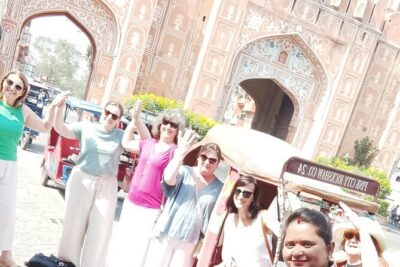
At Ajmeri Gate, you get a look at the large gateways and painted walls that mark the old city. The gate once formed part of the defensive system around Jaipur’s historic neighborhoods, and the surrounding architecture gives the ride a stronger sense of place than the modern roads near the start.
The tour description places the actual walled city from this point onward. You will not be stopping for a formal monument visit or climbing through the gate as part of a ticketed attraction. Instead, the value comes from seeing how the gate connects to streets, markets, and daily movement.
This is also where your guide’s explanations can add real value. Umesh is expected to cover heritage, architecture, religion, cuisine, and everyday life in Jaipur. That broad mix suits a cycling tour, since the sights are not isolated from the people who use them.
Ram Niwas Garden and Albert Hall
Ram Niwas Garden offers a change of pace. The garden has an Anglo-Indian design, and Albert Hall provides the main architectural focus. The route uses garden roads during morning hours, when traffic is not allowed, making this one of the easier and more relaxed sections for cycling.
You get about fifteen minutes here. That is enough for a look at the building and garden setting, though not enough for an interior museum visit. Admission is not included, and the tour does not take you inside the monuments.
This stop is particularly useful for families or less confident cyclists. The roads are described as traffic-free in the morning, so you can settle into the bicycle before the route becomes more connected to Jaipur’s market streets. Even so, the full ride still requires basic comfort on a bicycle unless you choose the e-rickshaw option.
More bike rides around Jaipur:
- 3-Hour Morning Bike Tour of Jaipur
★ 5.0 · 1,253 reviews - Nahargarh Cycle Tour in Jaipur
★ 5.0 · 62 reviews - Jaipur: 3-Hour Morning Bike Tour of Jaipur Old City
★ 5.0 · 45 reviews - Jaipur Cultural Cycling Tour
★ 5.0 · 35 reviews
Crossing the Pink City markets
The longest sightseeing section is the thirty-minute ride through the Pink City, also called the Chardiwari, or four-walled city. Jaipur is often described as one of India’s first planned cities, and this part of the route lets you see that planning through its walls, gateways, straight roads, and market districts.
You cross old markets rather than simply stopping at one famous building. That is important because the best part of Jaipur’s old center is often the connection between architecture and commerce. Shops, food stalls, local movement, and painted facades create a more useful picture of the city than a quick photograph at a single viewpoint.
The ride is not a substitute for visiting the City Palace or the major forts. It is a way to understand the setting around them. You should book this tour if you want context and street-level observation, not if your main aim is to spend the morning inside historic buildings.
Hawa Mahal from the street
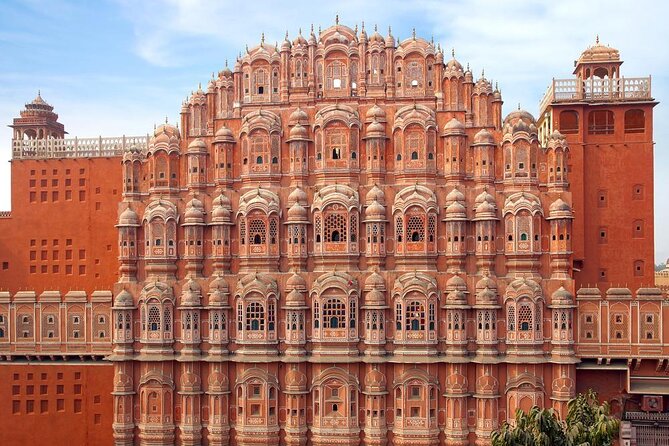
Hawa Mahal is the tour’s most recognizable stop. The Palace of Wind is famous for its many windows, built to allow air to move through the structure and to give royal women a view of the city without being seen from the street.
You have about ten minutes here. That is enough to photograph the facade and hear the basic story, but not enough to explore the interior. The admission ticket is not included, and this experience specifically focuses on outside views.
That limitation is worth planning around. You can use this ride to get your first look at Hawa Mahal, then return later when you have time for a paid visit. Seeing it from street level is still worthwhile, since the facade makes the most sense when you can observe its scale against the busy road and nearby buildings.
Govind Devji Temple and morning local life
The route continues toward Govind Devji Temple, where the focus shifts from grand architecture to local activity. You pass food markets, vegetable stalls, flower markets, and streets where morning trade is already underway.
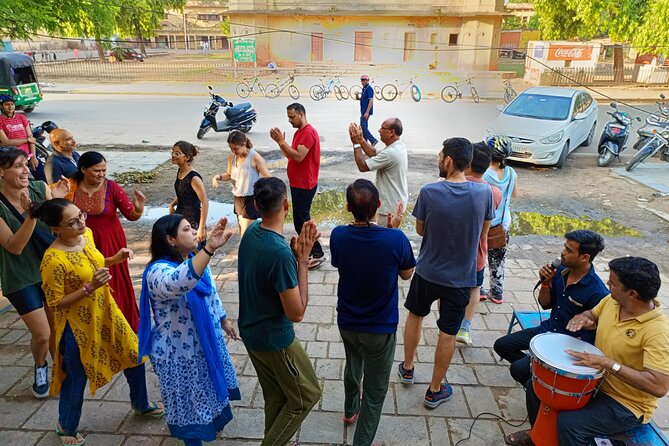
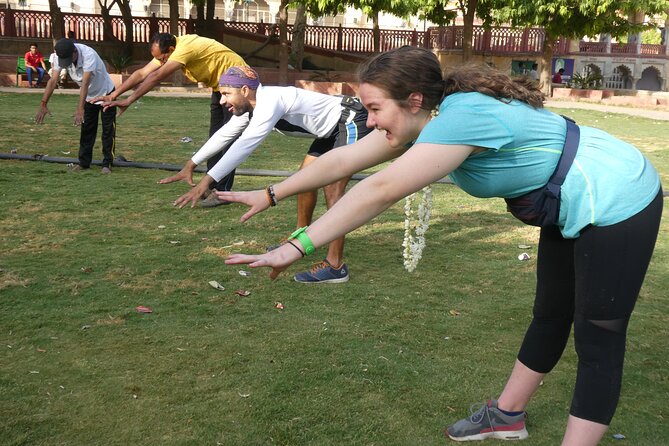
The stop lasts around thirty minutes and includes a laughing yoga session in the temple garden. The description also allows for interaction with local people, dancing to sacred songs, and a morning exercise session. These activities are optional in spirit, and you should be ready to take part respectfully rather than treat temple life as a performance.
This is one of the more distinctive parts of the ride because it connects movement, food, worship, and social life. The smells from flowers and food stalls become part of the experience. You are not only looking at Jaipur’s buildings, you are seeing how the city starts its day.
Tea, kachori, pakodas, jalebi, and lassi
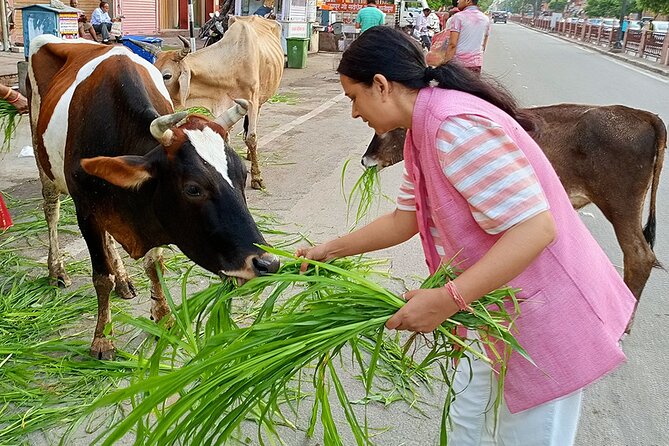
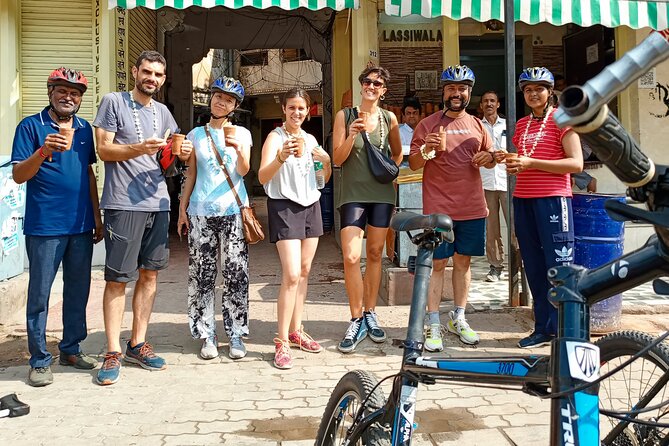
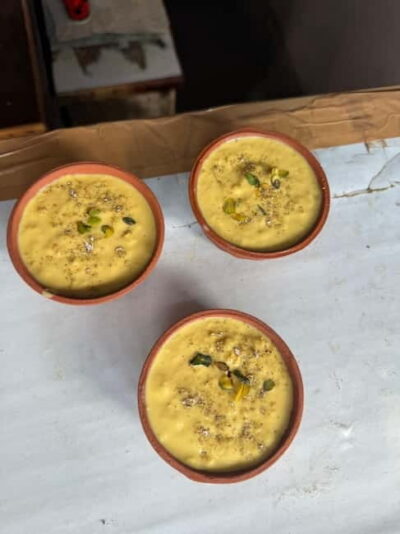
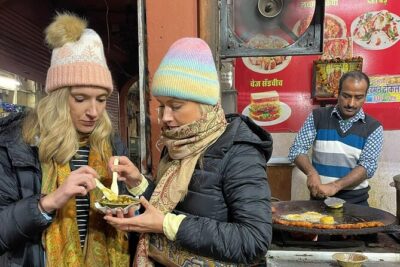
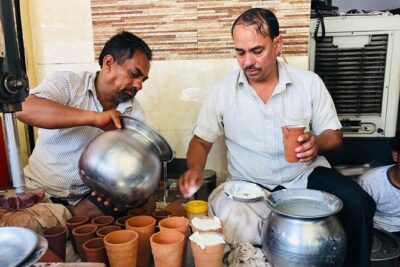
Food is included throughout the ride. You receive traditional morning tea from a tea stall in the walled city, along with snacks such as potato and chili fritters, kachori, pakodas, and jalebi. The final treat is kullhad lassi, a churned yogurt drink served in a traditional clay cup.
This is a useful feature for two reasons. First, it gives you a chance to try familiar Jaipur street foods without having to choose a stall on your own. Second, it makes the ride feel connected to ordinary morning routines rather than designed only around monuments.
The food is still street food, so anyone with a sensitive stomach should use sensible judgment. Bottled mineral water is included, but you should also consider your own tolerance for fried food, spice, and dairy before eating everything offered.
The food portion is not a full breakfast in the restaurant sense. Think of it as a series of small tastings spread across the route. That works well because you can keep cycling without stopping for a long sit-down meal.
Thatheron ka Rasta and the brass artisans
The final major stop is Thatheron ka Rasta, a lane associated with traditional brass utensil making. You can watch artisans shape utensils by hand without modern machines, and, if you like, try making one yourself.
This is the kind of stop that gives the ride more substance than a standard photo circuit. You see the skill and effort behind an everyday object, rather than only hearing a short explanation about Jaipur’s crafts. The chance to try the process also helps you understand how demanding the work can be.
The stop also connects you with local food outlets known for traditional preparation. The exact food choices can vary, but the point is to eat in the style of a local morning route rather than visit a polished tourist restaurant.
Allow about thirty minutes here. If you are interested in crafts, this may be one of the strongest parts of the tour. If you prefer only major landmarks, the artisan visit may feel less important, but it is precisely what makes the ride different from a standard city highlights tour.
Price, timing, and what you receive
At $33.40 per person, the price is reasonable for a private experience that lasts up to three hours and includes bicycles, helmets, water, food, tea, and lassi. You are also paying for two cycling staff members, route planning, local explanations, and the flexibility of a private group.
The value is strongest when you use the food and neighborhood access. A bicycle rental alone would not provide the same route, safety support, or help with ordering and tasting local snacks. The e-rickshaw provision also protects the value for families who would otherwise need to split up.
The tour is commonly booked about 32 days ahead. You do not have to wait that long, but the figure is a useful planning signal if your Jaipur dates are fixed. Confirmation is normally sent at booking, though reservations made within two days of departure may receive confirmation within 48 hours, subject to availability.
Free cancellation is available up to 24 hours before the start time. Changes or cancellations inside that window are not refunded. Since the ride depends on good weather, poor conditions may lead to a new date or a full refund.
Who should choose the bicycle, tandem, or e-rickshaw option
You do not need every person in your group to be an active cyclist. Tandem bicycles are available, and an e-rickshaw can be used by children, older family members, people with health concerns, or anyone who prefers not to pedal.
A buckled bicycle seat is available for infants. For back problems, heart problems, pregnancy, or other health concerns, the provider says an e-rickshaw ride will be supplied. You should still explain your needs when booking, since the best arrangement depends on the person and the group.
Most people can take part, but the activity is not completely passive. You should expect road riding, stops, food tastings, and time around city streets. If you want a quiet, air-conditioned sightseeing trip, this is not the right format.
Solo visitors can also benefit from the private setup. Umesh’s role is not limited to pointing out buildings. He answers questions about Jaipur’s customs and daily life, and the route gives you a clear starting point in a large city without requiring you to plan every market and food stop yourself.
Should you book this Jaipur tour?
Book it if you want a gentle introduction to Jaipur’s old city, local food, and daily routines in one compact morning. It is especially well suited to families, solo visitors, and anyone who prefers small streets and human-scale sightseeing to a succession of palace interiors.
I would also choose it early in a Jaipur stay. The route can help you understand where the main areas are, what foods you want to try again, and which sights deserve a separate paid visit. The outside-only format then becomes a first look rather than a limitation.
Skip it if you need full monument access, dislike cycling near city traffic, or want a slow museum morning. For everyone else, the combination of Umesh’s guidance, safe riding support, artisan contact, and generous food tasting makes this a practical and good-value way to meet Jaipur before the day gets hot.
FAQ
How long does the bicycle tour last?
The tour lasts approximately two and a half to three hours and ends back at the starting point.
Where does the tour begin and end?
It begins at Raj Mandir Cinema, C-16 Bhagwan Das Road, Panch Batti, C Scheme, Ashok Nagar, Jaipur. The activity ends back at the same meeting point.
Are entrance tickets to the monuments included?
No. The tour provides outside views of the monuments and does not include admission. The listed stops include Raj Mandir Cinema, Ram Niwas Garden, and Hawa Mahal from the exterior.
What food and drinks are included?
You receive traditional morning tea, bottled mineral water, snacks such as kachori, pakodas, jalebi, potato fritters, and chili fritters, followed by kullhad lassi.
Can someone who cannot ride a bicycle join?
Yes. Tandem bicycles and e-rickshaw options are available for children, older family members, people with health concerns, or anyone who does not want to pedal. A buckled seat is also available for infants.
What happens if the weather is poor?
The experience requires good weather. If it is canceled because of poor conditions, you are offered another date or a full refund. You can cancel for a full refund up to 24 hours before the start time.
Newest Jaipur trips we have written up
- Culture walking and food tour with guide in Jaipur.★ 5.0 · 5 reviews
- Jaipur Private Tour 2 Days with Car & Guide★ 5.0 · 13 reviews
- From Jaipur Private Taj Mahal & Agra Fort Tour with Delhi Drop★ 4.5 · 9 reviews
- Two days Jaipur tour with guide by private car.★ 5.0 · 13 reviews
- Jaipur Full Day Private Tour★ 5.0 · 6 reviews
- Explore Jaipur on a Motorbike – A Unique Experience★ 4.5 · 5 reviews
- Vintage Walk Amer★ 5.0 · 11 reviews
- Walking Tour of Pink City (World Heritage Site) with Local Guide★ 5.0 · 7 reviews
Jaipur Food Tours, compared.
Jaipur@Twilight Guided Heritage City walk tour with Food Tasting
Read our review →
Guided Morning E-Rickshaw Ride with Food Tasting at Jaipur
Read our review →Browse the lists this tour appears in