

Reviewed · JAIPUR SUNRISE AND FLOWER MARKET TOURS
Take in the Beauty of an Early Morning with Fresh Flowers
Jaipur wakes in a wash of rose petals, marigold garlands, temple bells, and tea steam. This early morning walk takes you from Hawa Mahal through old streets to Jaipur’s flower market, where farmers bring flowers and sellers arrange necklaces, bouquets, and loose petals before the heat arrives.
I like two things here: the quiet view of Hawa Mahal before traffic builds, and the chance to see an ordinary working market rather than only Jaipur’s grand monuments. Guides such as Harshit and Monty also add personal warmth, especially for solo visitors.
The main drawback is the early start and the short format. At about 90 minutes, you get a lively introduction, not a slow market study. The route is on foot, and the exact market activity will depend on that morning’s trade and temple schedule.
Key points at a glance
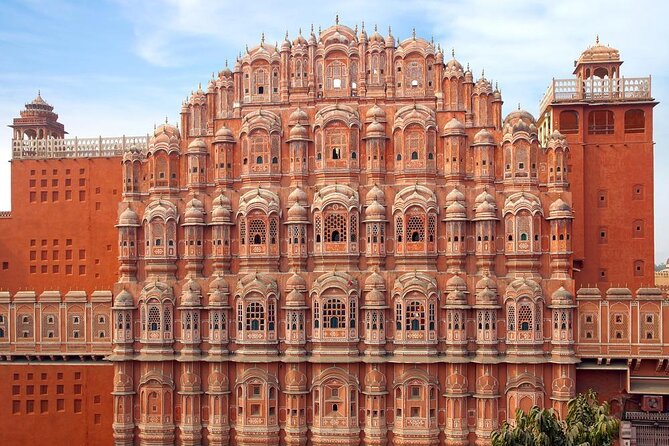
- Hawa Mahal before the crowds: The famous Palace of Winds is easier to photograph in the early morning, when traffic and people are limited.
- Jaipur’s oldest flower market: Farmers arrive from nearby villages with flower necklaces, bouquets, and loose petals.
- A sensory morning walk: Expect flower scents, bright colors, temple activity, street food, and the sound of Jaipur starting work.
- Two temple stops: The walk includes Kale Hanumanji Ka Mandir and a visit to Govind Devji Temple.
- Masala chai included: A stop at a local tea shop adds a simple, useful taste of daily life.
- Small-group setting: The group can include up to 15 people, with mobile tickets and no private transport included.
Why an early start changes Jaipur
Jaipur is famous for palaces, forts, and painted facades, but the city makes its strongest first impression before breakfast. Shops are beginning to open, farmers are unloading flowers, worshippers are heading to temples, and the streets have room to breathe.
That timing matters at Hawa Mahal. The Palace of Winds is one of Jaipur’s most photographed buildings, but later in the day the view can come with traffic, heat, and a crowd gathered along the road. In the early morning, you have a cleaner view of its pink and red sandstone facade. The 15-minute stop is short, but it gives you a useful orientation point and a good opening for photographs.
I like that the tour does not treat Hawa Mahal as the whole story. The building is the starting point, not the finish line. From there, you leave the postcard view and walk into the older streets, where the morning economy is already underway.
The tour costs $35 per person. That is not the cheapest way to wander through Jaipur, since the market and temples can be reached on foot or by local transport. The value comes from having someone guide you through the route, explain what you are seeing, manage the street walk, and add a tea stop. If you want a carefully planned introduction to local morning life, the price is reasonable. If you mainly want photographs at Hawa Mahal, you can spend less by visiting on your own.
More sunrise and flower market walks in Jaipur:
- Skip The Line: Sunrise Taj Mahal & Agra Day Tour From Jaipur
★ 5.0 · 251 reviews - Jaipur Tuk-Tuk Tour with Flower Market Visit
★ 5.0 · 124 reviews - Jaipur Tour by Tuk-Tuk or Car with Flower Market
★ 5.0 · 120 reviews
From Hawa Mahal to the flower sellers
The walk from Hawa Mahal passes heritage buildings, old gates, and temples before reaching the flower market. This part is important because it links Jaipur’s famous architecture with its working streets. You are not simply transferred from one attraction to another. You get a short look at how the old center functions in the morning.
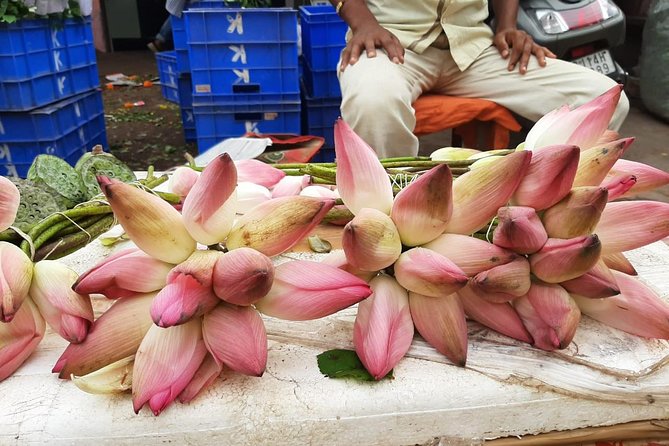
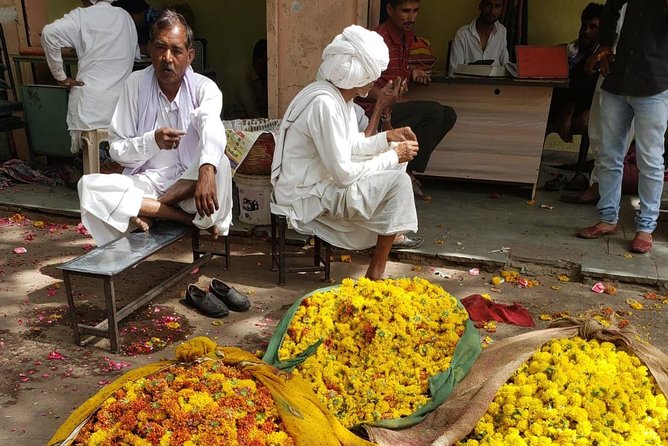
The market is described as one of Jaipur’s oldest wholesale flower markets. Farmers come from small villages to sell flowers and bouquets, while vendors arrange garlands, necklaces, and loose petals for sale. You might see flowers spread across both sides of the street, with the first sunlight catching the colors as the day begins.
This is a good setting for photography, but you should treat it as a working market first. People are buying and selling, not posing for a staged show. Ask before taking close portraits, keep your belongings secure, and follow your guide through the busiest parts. A guide can also help explain why some flowers are sold as loose petals and why others are tied into garlands.
The sensory side of this walk is its strength. The scent changes as you move from one stall to the next. Bright arrangements appear against old buildings and ordinary shopfronts. The market gives you something that a palace tour cannot: a close look at the daily trade that supports homes, shops, ceremonies, and worship.
Several accounts of the route also refer to a vegetable market. That makes the walk broader than a flower photo stop. You may see produce sellers working alongside the flower trade, giving you a better sense of the morning food supply in Jaipur. The tour description focuses on flowers, so do not book it expecting a long, formal vegetable-market visit. Think of it as an added part of the street walk.
Kale Hanumanji Ka Mandir and the temple setting
Kale Hanumanji Ka Mandir is included as part of the route toward the market. The provided information calls it one of Jaipur’s oldest wholesale flower market areas and also lists the temple as a stop. The route therefore combines market activity with religious places rather than separating them into different parts of the morning.
That combination helps explain why flowers matter here. Flowers are not only decorative goods. They are also connected with devotion, temple visits, offerings, and daily ritual. You can see the connection in the garlands and loose petals being prepared near places of worship.
The temple stop is not described as a long guided visit, so keep your expectations modest. You will have time to see the setting and understand its place in the morning route, but this is not a detailed religious lecture or a full temple tour. Dress and behave respectfully, and follow any instructions given at the site.
The walk may be especially useful if you are new to India. Jaipur’s old streets can feel fast and unfamiliar at first. Having a guide nearby gives you someone to answer questions, point out landmarks, and help you move through the route with more confidence. Harshit is specifically described as making solo visitors feel comfortable, while Monty is noted for a friendly and easy manner.
Govind Devji Temple after the market
The tour finishes with Govind Devji Temple, one of Jaipur’s best-known temples. The visit comes after the flower market, so you first see flowers as goods being sold and then encounter their connection with worship.
The stop is listed at 25 minutes, with admission included. That gives you more time here than at Hawa Mahal, although the pace will still be brisk. The temple is an active place of devotion, not a quiet museum. The atmosphere can change depending on the time and religious activity that morning.
One account of the experience highlights singing at a temple. That suggests the visit may include the sound of worship, though the exact activity is not guaranteed each day. This is one reason the early timing matters. You are seeing the temple during its morning rhythm rather than arriving after the city has fully shifted into daytime sightseeing.
The supplied meeting information names Kala Hanumanji Ka Mandir on Amer Road near Jal Mahal as the end point, while the itinerary also includes Govind Devji Temple. Because the route information presents both temple locations, confirm the final meeting and drop-off details when you book. This is a small but practical point, particularly if you have a later palace visit or transport reservation.
A few more Jaipur trips worth putting side by side
- 3-Hour Morning Bike Tour of Jaipur
★ 5.0 · 1,253 reviews - Guided Morning Bicycle Tour with Food Tasting in Jaipur
★ 5.0 · 117 reviews - Jaipur: 3-Hour Morning Bike Tour of Jaipur Old City
★ 5.0 · 45 reviews - Guided Morning E-Rickshaw Ride with Food Tasting at Jaipur
★ 5.0 · 28 reviews
Masala chai and the small details that make the walk work
Masala chai at a local tea shop is included. It is a modest extra, but it fits the tour well. After walking through the market and temples, a hot cup of spiced tea gives you a pause and a chance to ask questions.
The food stop may also include local Rajasthani snacks. These snacks are mentioned in the experience feedback, but they are not listed as a guaranteed inclusion, so think of them as a possible bonus rather than part of the promised package. The confirmed inclusion is masala chai.
I like this kind of stop because it keeps the tour grounded. You are not being taken to a polished restaurant for a formal meal. You are given a brief look at the sort of tea break that helps Jaipur get moving. If you have dietary restrictions, ask the guide what is being served before eating.
Harshit is named several times as a guide who explains the market and local history, recommends a good chai stall, and helps solo visitors feel comfortable. Monty is also named as a friendly guide who adds stories and keeps the walk relaxed. The provider may assign someone else, so treat those names as examples of the guiding style rather than a guarantee of who will lead your tour.
What the 90-minute format means
The stated duration is about one hour and 30 minutes. Some descriptions of the walk refer to closer to two hours, so allow extra time if your schedule is tight. A market walk can slow down when there is a temple visit, a photo opportunity, or a question from the group.
The group limit is 15 people. That is small enough to keep the guide within reach, though it is not a private tour. If the group reaches its maximum, you may need to wait while others take photographs or receive explanations.
The route is walking-based. Private transportation is not included. You begin on Hawa Mahal Road near Badi Choupad and finish at the location given for the experience, so arrange your own way to the starting point and allow time to reach it before the early departure.
Most people can take part, and the experience is near public transportation. Still, the route involves walking through streets and markets in the morning. Wear shoes you can walk in, keep your phone and camera ready, and avoid carrying more than you need.
The mobile ticket is convenient. You can keep the booking on your phone rather than arranging printed paperwork. Confirmation is provided at booking.
Who will enjoy this Jaipur morning most
I would choose this for a first visit to Jaipur, especially if you want an introduction to the city before spending the rest of the day at forts and palaces. The route gives you architecture, markets, temples, photography, and tea in one compact outing.
It also fits solo visitors well. The guide-led format gives you company during a street walk, and the small group can make it easier to ask questions. The experience has been described as comfortable for a female solo visitor, but you should still use the same street awareness you would anywhere in a busy city.
Photographers, filmmakers, Instagram users, writers, and anyone who enjoys color and texture will find plenty to work with. The strongest images are likely to come from the flower market and the early view of Hawa Mahal. Bring a phone or camera with enough battery, but stay aware of the sellers and worshippers around you.
This is less suitable if you dislike early mornings, want a long temple lecture, or prefer air-conditioned transport. It also may not suit anyone looking for a private, flexible itinerary. The tour has a fixed route, a short duration, and a group limit.
Price, weather, and cancellation details
At $35 per person, the tour is priced as a guided introduction rather than a simple attraction ticket. All fees and taxes are included, as is masala chai. You are paying for the guide’s time, route planning, local explanations, and the ease of moving between several places before breakfast.
The experience requires good weather. If poor weather causes cancellation, you are offered another date or a full refund. You can cancel up to 24 hours before the start time for a full refund. Cancellations or changes made within 24 hours are not refunded or accepted, based on local time.
That policy makes it worth checking your morning plans before booking. Do not place a tight connection, major sightseeing reservation, or early train departure immediately afterward. The walk is advertised at 90 minutes, but the longer reports of about two hours show why a little breathing room is wise.
Should you book this flower market tour?
Book it if you want to see Jaipur before the traffic and heat arrive, and if a local market feels more appealing than another formal monument. The best parts are the early view of Hawa Mahal, the flower sellers and farmers, the temple connection, and the simple chai stop.
Skip it if you want private transport, a slow photography session, or a detailed visit focused on only one temple. For most first-time visitors, though, this is a useful way to begin the city. It gives you color, smell, sound, and a look at daily work, all before the main sightseeing day gets underway.
FAQ
Where does the tour start?
It starts on Hawa Mahal Road at Badi Choupad, near J.D.A. Market in Jaipur.
Where does the tour finish?
The provided end point is Kala Hanumanji Ka Mandir on Amer Road near Jal Mahal. Govind Devji Temple is also included in the route, so confirm the final details when booking.
How long does the experience last?
The stated duration is approximately one hour and 30 minutes. Some descriptions refer to a walk of about two hours, so allow extra time.
Is transportation included?
No. Private transportation is not included. The experience is primarily a walking tour and is near public transportation.
What places are visited?
The route starts at Hawa Mahal, passes through heritage streets and market areas, includes Kale Hanumanji Ka Mandir, and visits Govind Devji Temple.
Is tea included?
Yes. Masala chai at a local tea shop is included.
What is the maximum group size?
The group can include a maximum of 15 people.
Can most people participate?
Yes. The activity information says most people can participate. The route is on foot, so comfortable walking ability is useful.
What is the cancellation policy?
You can cancel at least 24 hours before the start time for a full refund. Cancellations or changes made within 24 hours are not accepted or refunded. If bad weather cancels the experience, you are offered another date or a full refund.
Newest Jaipur trips we have written up
- Culture walking and food tour with guide in Jaipur.★ 5.0 · 5 reviews
- Jaipur Private Tour 2 Days with Car & Guide★ 5.0 · 13 reviews
- From Jaipur Private Taj Mahal & Agra Fort Tour with Delhi Drop★ 4.5 · 9 reviews
- Two days Jaipur tour with guide by private car.★ 5.0 · 13 reviews
- Jaipur Full Day Private Tour★ 5.0 · 6 reviews
- Explore Jaipur on a Motorbike – A Unique Experience★ 4.5 · 5 reviews
- Vintage Walk Amer★ 5.0 · 11 reviews
- Walking Tour of Pink City (World Heritage Site) with Local Guide★ 5.0 · 7 reviews
Jaipur Sunrise and Flower Market Tours, compared.

Skip The Line: Sunrise Taj Mahal & Agra Day Tour From Jaipur
Read our review →
Half-Day Guided Sightseeing Tour with Flower Market
Read our review →

Sunrise Taj Mahal Day Tour from Jaipur with Agra Fort
Read our review →
Taj Mahal at Sunrise and Agra Day Tour from Jaipur
Read our review →
Jaipur Sunrise Tour with Morning Flower Market Walk
Read our review →
Browse the lists this tour appears in