
Reviewed · WALKING TOURS
“Jaipur Cultural Walk: Explore life behind the pink walls”
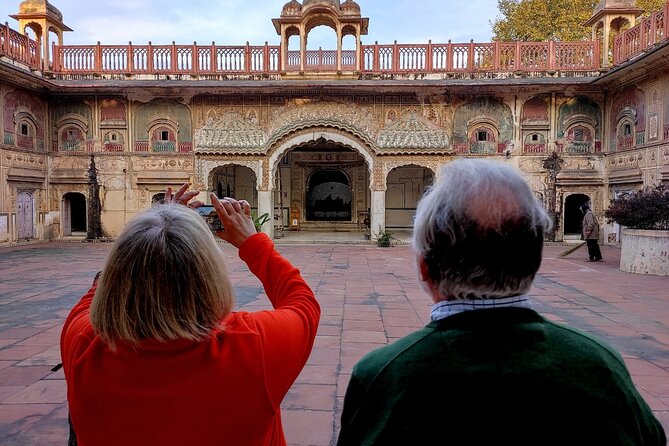
Jaipur’s pink-walled center makes the most sense at walking speed. This three-hour route with guide Kumar moves through working bazaars, narrow lanes, artisan workshops, and food stalls where you can see bangles, metal vessels, incense, spices, sweets, and everyday city life up close. I like the small maximum of eight, and I like that the route includes clean, safe food samples rather than only photo stops. The drawback is simple: this is a real walking tour, not a gentle sightseeing ride, so heat, crowds, uneven streets, and a moderate fitness level are part of the deal.
Key things to know
- Three working bazaars: Follow the route from Tripolia Bazar to Chhoti Chaupar and Badi Chaupar, with each area offering a different look at Jaipur life.
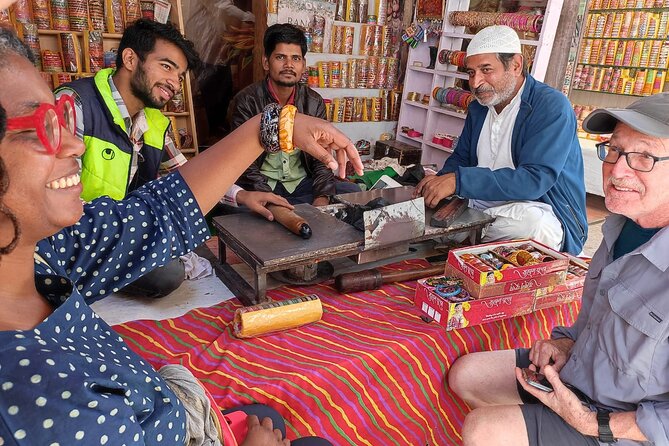
- Local craft in action: Watch artisans make lacquer bangles and brass or metal vessels instead of seeing only finished goods in shops.
- Food and drink included: Masala chai, freshly cooked snacks, sweets, coffee or tea, and bottled water are included.
- Small-group format: The group is limited to eight, which makes it easier to hear Kumar and ask questions.
- Point-to-point walking: Meet opposite Tripolia Gate and finish near City Palace Parking Area, so you should plan your onward transport from the end point.
- Best for active visitors: You need a moderate level of fitness, and the tour requires suitable weather.
Why Jaipur’s old center works best on foot

Jaipur’s Old City is laid out in a way that rewards slow movement. A vehicle can carry you past pink facades and crowded market streets, but it cannot show you the small workrooms, alleyway stalls, or food preparation that make the center feel lived in.
On foot, you can pause when an artisan is shaping a bangle or when a shopkeeper is arranging spices. You also avoid the common problem of trying to hear a guide through traffic from the back of a bus. With no more than eight people, the group can stay close together and move through lanes without feeling like a parade.
I especially like the balance between sightseeing and ordinary work. The tour is not built only around grand monuments. It gives you a look at the people who make, sell, cook, decorate, and worship in the same city center that visitors come to photograph.
The route takes about three hours. That is long enough to gain a sense of place without using up an entire day reserved for Jaipur’s forts and palaces. Still, you should expect a fair amount of walking and standing. Wear practical shoes, bring sun protection, and keep some room in your schedule at the end because the tour finishes at a different place from where it begins.
More heritage walks in Jaipur:
- Jaipur Bazaar & Food Walking Tour
★ 5.0 · 281 reviews - Heritage Walk & Street Food Tasting in Jaipur
★ 5.0 · 158 reviews - Magical Walk of Jaipur
★ 5.0 · 121 reviews
Tripolia Bazar, where craft meets daily trade
The first hour centers on Tripolia Bazar, a useful starting point because it places you among working handicraft makers rather than in a formal museum. The designated market areas are associated with local artisans, and the route gives you a chance to watch some of their work as it happens.
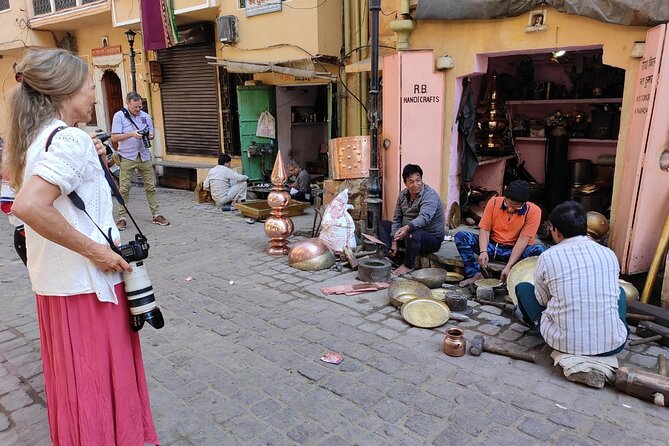
One special craft is lacquer bangle making. These colorful pieces are closely tied to Jaipur’s craft traditions, but the important point here is seeing the hands and tools behind the finished item. You can also watch artisans making brass and metal vessels. The work gives this part of the walk a practical focus: you see objects being produced for use, trade, and decoration.
Photography is allowed, but use common courtesy. Ask before taking close portraits or detailed pictures of a person at work. Even when a guide says photography is permitted, a quick gesture and a respectful pause go a long way in a small workshop.
Tripolia Bazar can also be a useful place to get your bearings in Jaipur’s market culture. You may see shops and workshops packed closely together, with a mix of goods rather than one carefully arranged display. That can feel less polished than a showroom, but it is also the reason the stop has value.
The limitation is that the exact workshop activity may vary. Artisan work is not a stage show, and a particular maker may be busy, away, or working on something different when your group arrives. Treat the stop as a chance to observe real production, not as a guaranteed demonstration with a fixed script.
Chhoti Chaupar and a proper masala chai break
The second hour moves toward Chhoti Chaupar, where the pace includes a short tea break. You will have masala chai and freshly cooked hot snacks, with coffee or tea and bottled water included as part of the outing.
This pause matters more than it might sound. Jaipur’s streets can be tiring, especially in warm weather, and a seated drink gives you time to ask Kumar about what you have seen so far. It also lets you try a small amount of local food without having to choose an unknown stall on your own.
The food is presented as clean and safe for the group, but you should still pay attention to your own dietary needs. The information provided does not specify vegetarian, vegan, allergy-friendly, or gluten-free options. If you have restrictions, ask before eating rather than assuming the snacks will suit you.
After the break, the route heads into alleyways lined with small decorative and household stalls. You might find incense, candles, and strings used for wall decoration. These goods offer a quieter look at the city than the metalwork in Tripolia Bazar, and they help explain how religious and domestic life appear in ordinary shopping streets.
This is also where a small group helps. A larger party could block a narrow lane or make it hard to hear an explanation. With a maximum of eight, you have a better chance to stay near the guide and notice details that are easy to miss from behind a crowd.
Badi Chaupar, sweets, spices, and flowers
The final hour takes you to Badi Chaupar, where food and market life come together. One stop is a small factory where confectioners prepare curd, cheese, and sweets from milk. You can taste freshly cooked sweets there, adding another food moment to the chai and snacks earlier in the walk.
The dairy stop gives you a view of production rather than simply a sweet shop counter. You can see how familiar foods begin, and the visit connects the market to the kitchens and homes that depend on these products. As with the snacks, the tour details do not promise specific sweet varieties, so keep your expectations open.
From there, the walk continues through a spice bazaar and flower market. Spices bring scent and color to the route, while flowers point toward the ceremonial and devotional side of Jaipur. You may also have chances to observe local prayer customs and shopping habits, since the walk is designed around daily life as well as trade.
The market sections are likely to be the most crowded and least predictable part of the outing. Your guide helps you stay oriented, but you should keep your belongings secure and remain aware of the group. Narrow streets can require patience, especially when people, goods, and vehicles share the same space.
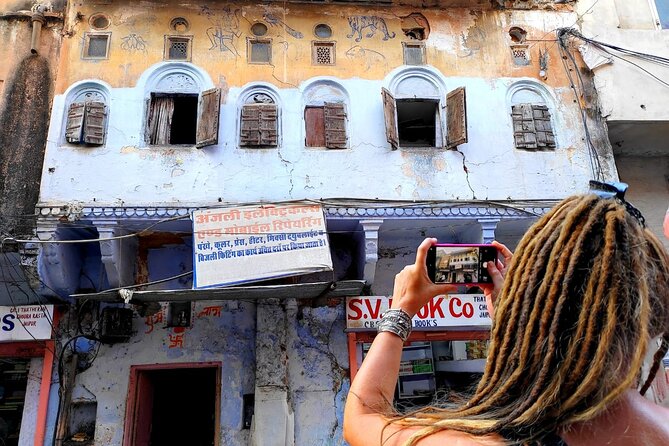
Badi Chaupar is a strong finish because it gathers several themes from the walk: food, commerce, religion, and the old city’s architecture. The route can also include views of old havelis and interesting historic buildings, details that are easy to pass without context. If architecture matters to you, ask Kumar to point out features as you go rather than waiting for a formal monument stop.
Same city, a completely different sort of morning:
- Jaipur: Private Full Day Sightseeing Tour By Car with Guide
★ 4.9 · 1,839 reviews - 3-Hour Morning Bike Tour of Jaipur
★ 5.0 · 1,253 reviews - Jaipur: Private Sightseeing Day Tour with Guide by Car
★ 4.8 · 773 reviews - Jaipur: Full-Day City Tour with Car, Guide & Skip-the-Line
★ 4.8 · 512 reviews
What the guide adds to the route
The value of this outing depends heavily on the guide. Kumar is named as the local guide associated with the experience, and the tour is built around explanations of city life, traditions, architecture, food, worship, and shopping.
That range is useful because Jaipur’s markets can otherwise seem like a blur of color and noise. A guide can explain what you are looking at, why a craft matters, and how a bazaar fits into the wider city. You are not simply being led from one place to another.
The small group should also make the conversation more personal. Ask questions as you walk, especially if you want more attention on Hindu traditions, havelis, local food, or craft production. The route appears designed for curious people who want context, not for anyone seeking only a checklist of major sights.
There is a tradeoff. A three-hour walk cannot provide a full course in Jaipur’s history, and the experience does not replace visits to the city’s major palaces or forts. Think of it as a close look at the Old City’s working streets, best paired with separate sightseeing at places such as the City Palace.
Is $30 a fair price?
At $30 per person, I consider this a reasonable price if you value a guide, small group, and included food. You are paying for about three hours of local orientation, not just a route between public streets. Chai, hot snacks, sweets, and bottled water add modest practical value, while the main benefit is having someone explain what you are seeing.
The price looks better for first-time visitors who might otherwise wander through the bazaars without knowing where to go or which food stops to trust. It also suits anyone who wants to understand the city through workshops and markets rather than spending every hour at ticketed monuments.
It is less compelling if you already know Jaipur well, dislike walking, or would rather spend $30 on entry fees and independent transport. The tour does not include hotel pickup or drop-off in the group format, so you need to arrange your own way to the meeting point and onward from the finish.
The starting point is the Government Maharaja Public Library on Chaura Rasta Road, opposite Tripolia Gate in Bapu Bazar. The walk ends at City Palace Parking Area near Gangori Bazaar. Both locations are near public transportation, but check the map carefully and allow time to reach the library before the start.
Who should book this Jaipur walk?
I would choose this for a first or second visit to Jaipur when I wanted to understand the Old City beyond its famous facades. It is especially well suited to:
- People who enjoy local food in small portions
- Visitors interested in crafts and workshops
- Anyone who prefers a small group to a bus tour
- Walkers who want market orientation
- Curious visitors who like asking questions about traditions and daily routines
It may not suit you if you need a slow, low-effort outing, dislike market crowds, or have mobility concerns. The supplied details call for moderate physical fitness, and there is no promise of hotel transport or a fully accessible route.
The tour requires good weather. If poor weather causes cancellation, you are offered another date or a full refund. You can cancel for a full refund up to 24 hours before the start time, but cancellations or changes inside that window are not refunded or accepted.
Should you book it?
Book this walk if you want Jaipur to feel like a living city rather than a string of monuments. The strongest reasons are the small group, Kumar’s local guidance, the chance to see lacquer bangles and metal vessels being made, and the food stops at chai, snack, sweet, spice, and flower markets.
Skip it if you are looking for a vehicle-based tour, a long visit inside major palaces, or a relaxed outing with little walking. For an active visitor with three spare hours, $30 buys useful orientation and a close look at the pink-walled center that independent sightseeing often misses.
FAQ
How long does the Jaipur Cultural Walk last?
The walk lasts approximately three hours.
How many people can join the tour?
The maximum group size is eight people.
Who may guide the tour?
Kumar is identified as the local guide associated with the experience.
Where does the tour begin?
It begins at the Government Maharaja Public Library on Chaura Rasta Road, opposite Tripolia Gate in Bapu Bazar, Jaipur.
Where does the tour finish?
It ends at City Palace Parking Area near Gangori Bazaar in Jaipur.
Is hotel pickup included?
No. Hotel pickup and drop-off are excluded from the group tour.
What food and drinks are included?
The experience includes coffee or tea, masala chai, freshly cooked snacks, freshly cooked sweets, and bottled water.
Can I take photographs?
Yes. Photography is allowed during the Tripolia Bazar portion of the walk.
How fit do I need to be?
You should have a moderate level of physical fitness because this is a walking tour through bazaars and alleyways.
Can I cancel for a full refund?
Yes. You can cancel at least 24 hours before the start time for a full refund. Cancellations within 24 hours are not refunded.
Newest Jaipur trips we have written up
- Jaipur Private Tour 2 Days with Car & Guide★ 5.0 · 13 reviews
- Culture walking and food tour with guide in Jaipur.★ 5.0 · 5 reviews
- From Jaipur Private Taj Mahal & Agra Fort Tour with Delhi Drop★ 4.5 · 9 reviews
- Two days Jaipur tour with guide by private car.★ 5.0 · 13 reviews
- Explore Jaipur on a Motorbike – A Unique Experience★ 4.5 · 5 reviews
- Jaipur Full Day Private Tour★ 5.0 · 6 reviews
- Vintage Walk Amer★ 5.0 · 11 reviews
- Walking Tour of Pink City (World Heritage Site) with Local Guide★ 5.0 · 7 reviews
Walking Tours, compared.

Jaipur Heritage Evening Walk – The Twilight Magic of Pink City
Read our review →
Nahargarh Water Walk – Guided 2-Hour Heritage Tour in Jaipur
Read our review →
Jaipur Heritage Walking Tour – Local life, Havelis and Temples
Read our review →

Jaipur@Twilight Guided Heritage City walk tour with Food Tasting
Read our review →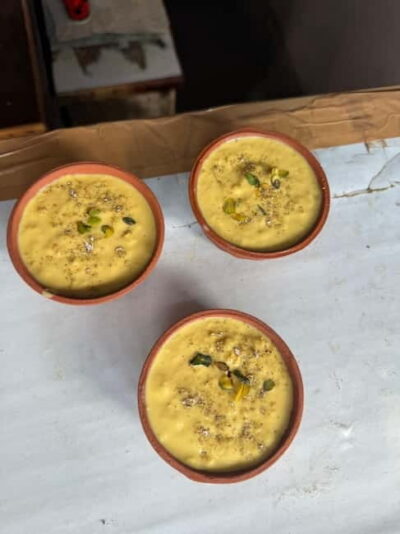
Browse the lists this tour appears in