
Reviewed · DELHI AND GOLDEN TRIANGLE TOURS FROM JAIPUR
From Delhi: Private 4-Day Golden Triangle Tour with Pickup
The Taj Mahal at sunrise is the emotional center of this four-day trip, but the full route gives you much more: Old Delhi’s spice-scented lanes, Agra’s Mughal monuments, and Jaipur’s royal forts and palaces. You travel in a private air-conditioned vehicle, with a driver for the full route and a local guide in each city.
I like the way this trip combines major sights with small touches, especially the Chandni Chowk rickshaw ride and the stop at Galta Ji Temple, where monkeys roam around the pilgrimage site. I also like the flexible hotel choice, which lets you select three-, four-, or five-star accommodation. The main drawback is the pace: four days cover a lot of ground, and monument tickets can add about $80 per person to the advertised price.
Key points to know before booking

- Sunrise at the Taj Mahal: You visit early, return for breakfast, then go back out for Agra Fort and two smaller sights.
- A private driver for the whole route: Your vehicle size depends on your party, from a four-seat sedan for one or two people to a 10-seat minivan for larger groups.
- A different local guide in each city: Delhi, Agra, Fatehpur Sikri, and Jaipur are handled by local specialists rather than one guide covering every stop.
- Three hotel categories: Choose from three-, four-, or five-star accommodation, with breakfast included when that option is selected.
- Extra admission costs matter: Monument tickets in Delhi, Agra, and Jaipur cost approximately $80 per person and are not included.
- Long road days: The private car gives you comfort and control, but Day 3 and Day 4 include substantial driving.
What this Golden Triangle route actually covers

The route links India’s three most visited northern cities: Delhi, Agra, and Jaipur. Delhi provides the capital’s layered history, Agra brings the Taj Mahal and Mughal architecture, and Jaipur adds Rajput forts, royal residences, and planned-city monuments.
You begin with pickup anywhere in Delhi, Noida, Gurugram, Ghaziabad, or Faridabad. Pickup is also available from Delhi airports. That broad pickup area is useful if you are staying outside central Delhi or arriving by air and want to begin without arranging a separate transfer.
The tour is private, so you are not tied to a large coach group. That matters in India, where traffic, heat, queues, and sightseeing time can vary. You can ask your guide to slow down at a monument, spend longer taking photographs, or move on when you have had enough.
The arrangement is not one guide for the entire four days. Instead, you meet local guides in the cities and at major sites. Names connected with especially strong service include Bawesh in Delhi, Rashid in Agra, Ali in Fatehpur Sikri, and Mishi, also known as Maharishi Mishra, in Jaipur. Guide assignments can change, but the local-guide format is a real advantage because each person focuses on the place they know best.
More Delhi and Golden Triangle trips from Jaipur:
- Golden Triangle & Ranthambore: 4-Day Private Tour from Delhi
★ 5.0 · 355 reviews - From Delhi: Private 3-Day Golden Triangle Tour with Hotels
★ 4.9 · 339 reviews - From Delhi: Private 5-Day Golden Triangle Tour
★ 4.9 · 208 reviews
Day 1: Old Delhi lanes, New Delhi landmarks, and the road to Agra
Your first morning begins at Jama Masjid, one of Old Delhi’s best-known landmarks. The mosque gives you an immediate sense of the city’s older character, with dense streets and a strong contrast to the broad avenues of New Delhi later in the day.
The rickshaw ride through Chandni Chowk is one of the most memorable parts of the schedule. You move through narrow streets and pass the Spice Market, where color and scent do much of the storytelling. This is not a quiet sightseeing experience. It is short, lively, and crowded, so keep your belongings secure and wear shoes you can manage on uneven streets.
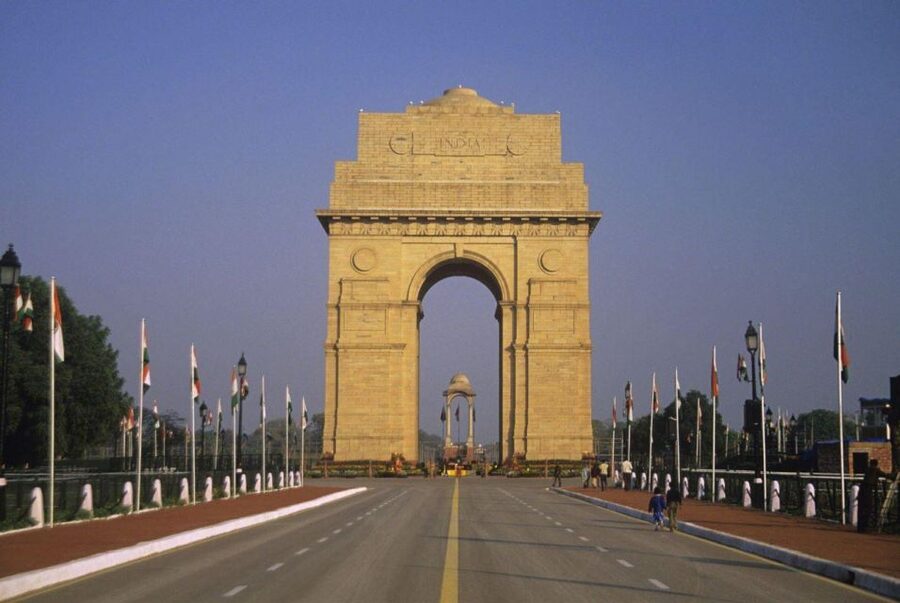
You then pass the Red Fort before continuing toward India Gate and the President’s Palace area. These drives help you see the difference between Old Delhi and the more formal government district. Because some of these sights are viewed from the vehicle rather than explored at length, ask your guide what will be a proper stop and what will be a pass-by view.
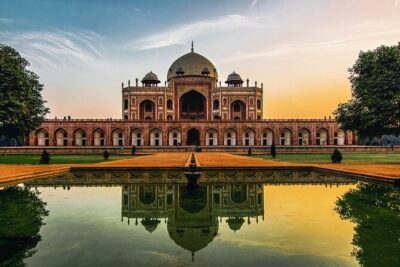
The day continues with Qutub Minar, Humayun’s Tomb, and the Lotus Temple. Qutub Minar is the kind of monument that rewards looking upward and taking your time with its stone detail. Humayun’s Tomb offers a calmer setting and helps explain the Mughal design ideas that later reached a grander expression at the Taj Mahal.
The Lotus Temple changes the mood again. Its modern flower-like form is unlike the older forts and tombs, giving the day some variety. You cannot give equal time to every Delhi sight in one day, so think of this as a broad introduction rather than a complete visit to the capital.
After sightseeing, you drive to Agra. The first day packs in many stops before the road journey, so this is likely to feel full. Your private vehicle, bottled water, and the ability to leave your luggage in the car make the transfer easier.
Day 2: Taj Mahal sunrise and Agra’s Mughal monuments
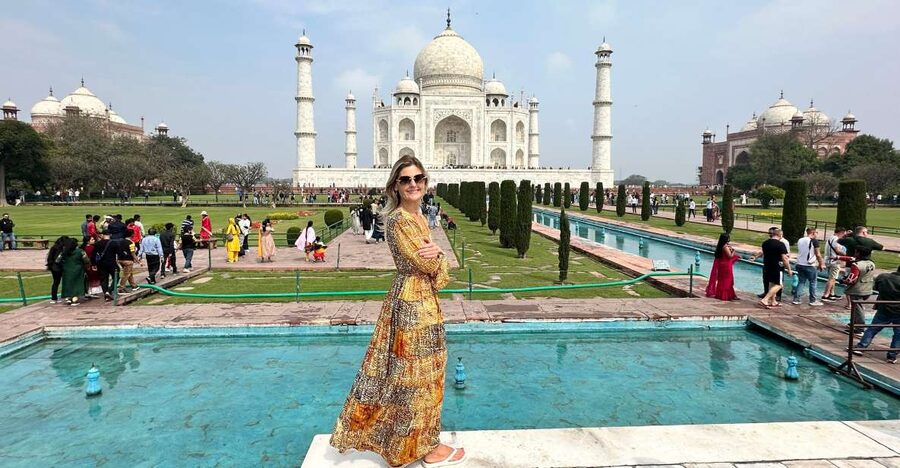
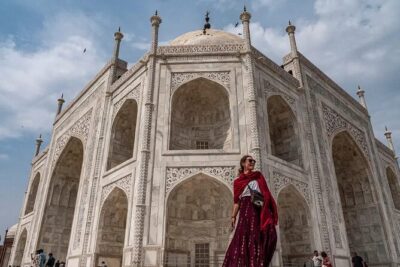
The early start is worth it for the Taj Mahal. The white marble changes with the morning light, and the quieter setting gives you a better chance to appreciate the building before the day becomes hotter and busier.
An electric vehicle carries you between the parking area and the Taj Mahal entrance. Your guide joins you for the visit, explaining the monument’s design, craftsmanship, and story. The schedule then sends you back to the hotel for breakfast and a shower, which is a practical touch after such an early start.
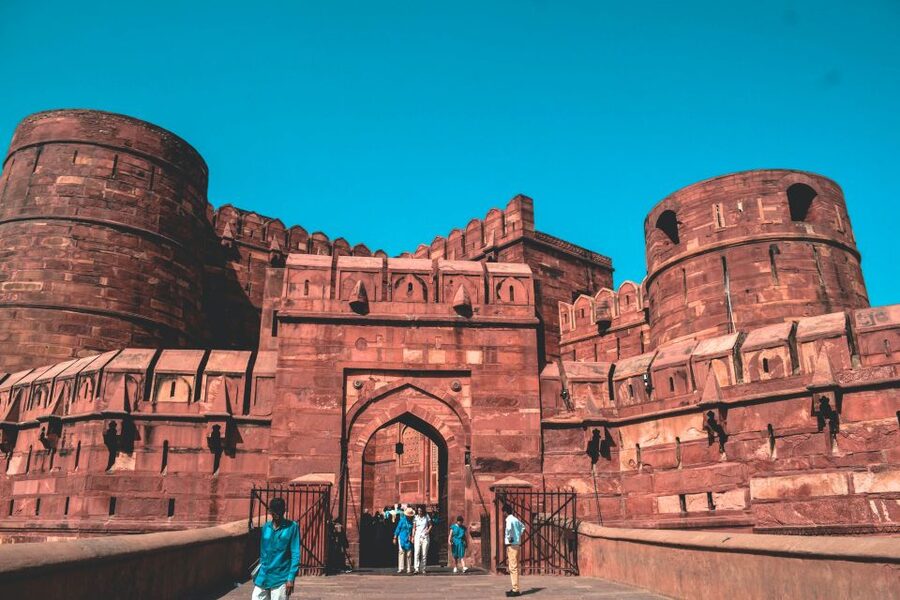
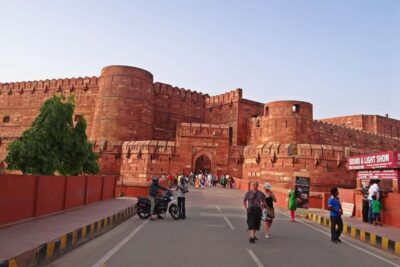
Later, you visit Agra Fort. This enormous red sandstone complex is not simply a fort in the military sense. It was also a royal residence, and its courtyards, halls, and views toward the Taj Mahal help you understand how Mughal power worked. Give yourself time here. The fort has enough scale and detail to reward more than a rushed walk-through.
The Tomb of I’timād-ud-Daulah is commonly called the Baby Taj. It is smaller than the Taj Mahal, but its marble inlay work is a major reason to include it. The detailed decoration is easier to study here, and the quieter scale can make the craftsmanship more approachable.
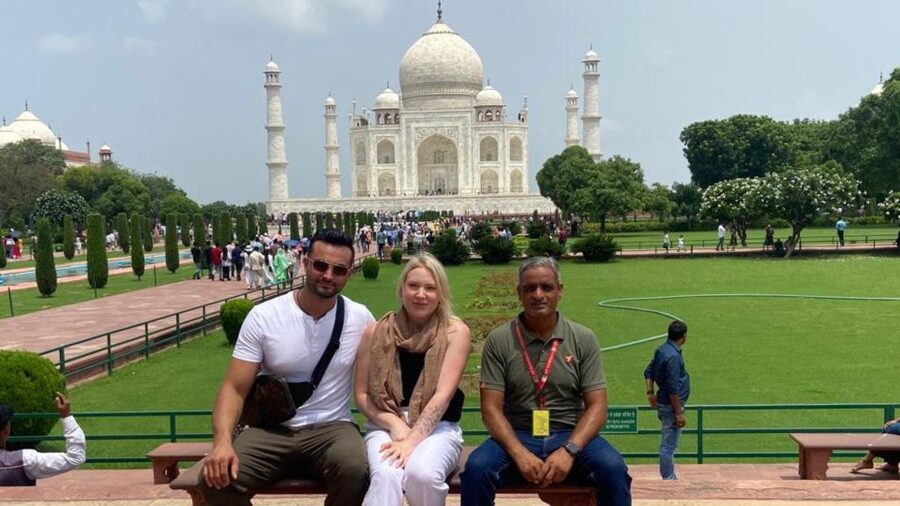
Mehtab Bagh, across the Yamuna River, provides a different angle on the Taj Mahal. The garden is valued mainly for the view, especially when you want to see the monument from a distance rather than from its formal entrance. It also gives the day some breathing room after the grand interiors of Agra Fort and the Baby Taj.
You spend a second night in Agra. That is better than trying to combine Agra sightseeing with a late transfer to Jaipur. It also makes the sunrise visit practical instead of forcing you to leave Delhi in the middle of the night.
Day 3: Fatehpur Sikri, Abhaneri, and Galta Ji on the way to Jaipur

Day 3 is the road-and-sights day. You leave Agra early for Fatehpur Sikri, a UNESCO World Heritage Site built under the Mughal emperor Akbar. The abandoned imperial city has grand gateways, courtyards, and red sandstone architecture, with Buland Darwaza and Jama Masjid as major highlights.
Fatehpur Sikri works best when your guide explains how the buildings fit together. Without context, you may see a series of impressive walls and courtyards. With guidance, the site becomes a story about imperial planning, court life, and a capital that was later left behind.
After lunch, the route continues to Abhaneri. Its ancient stepwell is the reason for the stop. The sharply arranged steps create a striking geometric pattern, and the site offers a welcome change from the large imperial monuments earlier in the trip.
Galta Ji Temple, often called the Monkey Temple, adds a religious and local dimension to the day. It is a Hindu pilgrimage site set among natural surroundings, with monkeys living around the complex. Keep your food and loose items secure, follow your guide’s advice, and remember that this is an active religious place rather than a staged animal encounter.
You reach Jaipur in the evening and check into your hotel. The optional dinner at Green Pegion includes folk dance and costs extra. It may suit you if you want an evening performance after a long day, but you should treat it as an add-on, not part of the basic tour price.
This is the most demanding driving day. The advantage is that you see three worthwhile places between Agra and Jaipur instead of spending the whole day on the highway. The tradeoff is less free time and a later arrival.
More multi-day Rajasthan trips starting in Jaipur:
- 2-Day Private Jaipur City Sightseeing Tour with Three Forts
★ 5.0 · 145 reviews - Ranthambore Tiger Safari from Jaipur – 1 or 2 Days
★ 5.0 · 88 reviews - Private 6-Day Golden Triangle Tour: Delhi, Agra, Jaipur by Car
★ 5.0 · 60 reviews - 2 Day Jaipur Tour for First-Time Visitors
★ 5.0 · 51 reviews
Day 4: Amer Fort, Jaipur’s royal center, and the return to Delhi
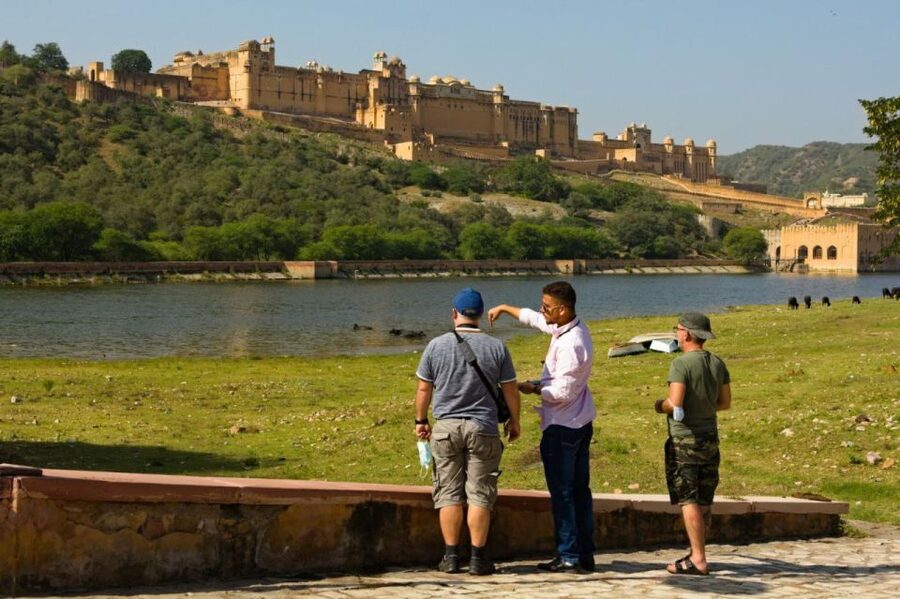
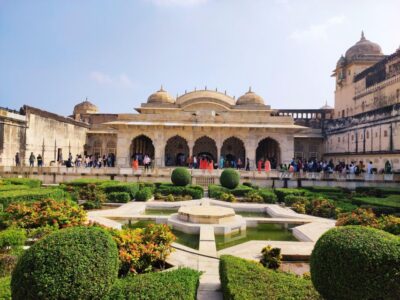
After breakfast, you begin with Amer Fort. Built for the Rajput rulers, the fort combines defensive walls, royal rooms, gateways, and views over the surrounding area. It is one of Jaipur’s strongest sights because it gives you both architecture and a clear sense of royal power.
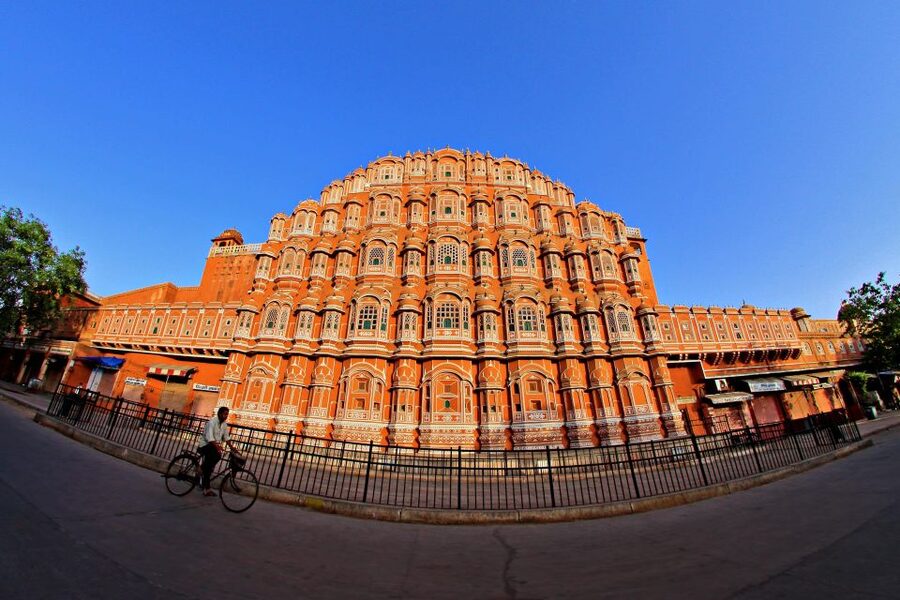
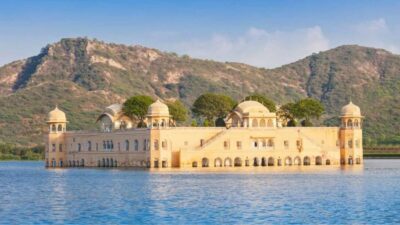
You then pass Jal Mahal, the palace set in the middle of Man Sagar Lake. The stop is mainly for viewing and photographs, rather than a full palace visit. Hawa Mahal, or the Palace of Winds, is another short but important Jaipur sight. Its decorated facade was designed to allow women of the royal household to observe street life from behind screened windows.
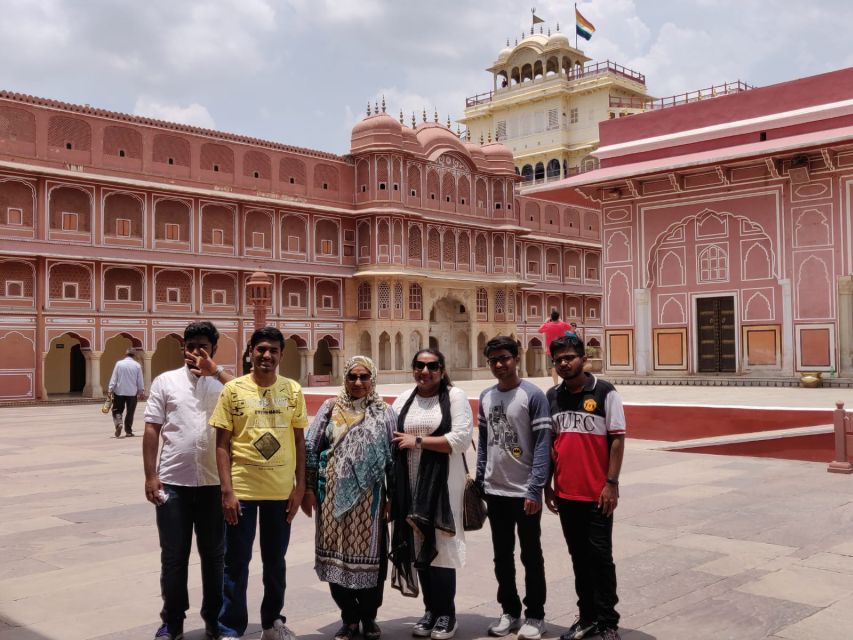
The City Palace brings you back to Jaipur’s ruling family and court traditions. You can expect courtyards, royal buildings, and decorative details rather than one single monument. A local guide is useful here because the palace complex can otherwise feel like a collection of separate rooms and facades.
Jantar Mantar finishes the sightseeing. This large astronomical observatory contains monumental instruments built to measure time and track celestial positions. It is one of Jaipur’s most unusual sights, and a guide can make the purpose of the structures far easier to understand.
After Jaipur, your driver takes you back to Delhi and drops you at your preferred location. This final drive can be tiring, particularly after four days of early starts. If you have a late flight, confirm the expected arrival time before booking it. The tour promises drop-off, but traffic can make the final transfer variable.
Hotel choices and what the price really means
The advertised cost is $123 per person, but you need to check which accommodation option you are selecting. Three nights of hotel accommodation and breakfast are included only when the accommodation option is chosen.
The listed examples include Hotel Taj Vilas or Hotel Regal Vista in Agra for the three-star level, Hotel Grand Mercure or Hotel Radisson for four stars, and DoubleTree by Hilton or Courtyard by Marriott for five stars. In Jaipur, examples range from Vesta Maurya Palace or Lilypool to Sarovar Premiere, Indana Palace, or Trident.
These are example properties, so the exact hotel may be a similar property rather than the named one. Rooms are generally twin-sharing. A booking of three uses triple-sharing unless you pay for two separate rooms. The additional cash charge is listed as $150 from April through September or $250 from October through March.
At the base price, the tour can be good value for a private vehicle, driver, local guides, hotel transfers, bottled water, fuel, and the major sightseeing route. But the extra monument tickets are important. Budget approximately $80 per person for entry in Delhi, Agra, and Jaipur, plus your meals and drinks.
Five-star accommodation can make the package much more expensive, but it also makes sense if you value a comfortable base after the early Taj Mahal start and long drives. Three-star hotels may suit you better if you prefer to spend your money on the experience rather than the room.
The private vehicle and the pace of the road
The vehicle depends on group size. One or two people use a four-seat sedan, three or four people use a six-seat wagon, and five to ten people use a 10-seat minivan. All vehicles are air-conditioned.
A single driver stays with you throughout the route, which is helpful for luggage and makes the transfers simpler. Several particularly positive experiences involved drivers named Bhola, Mehboob Khan, Rahul, Shahid, and Sanjay. Specific assignments are not guaranteed, but the driver’s role is central to the trip. You are spending many hours on the road, not just moving between short city stops.
One useful tip is to bring a small cushion for the longer drives. Carry small cash notes for tips and minor roadside assistance, since you may encounter people who ask for money when handling luggage. Tipping amounts are not specified, so plan your own approach rather than assuming it is included.
The tour is wheelchair accessible, but pregnant women are listed as unsuitable for the activity. Children need a passport or identity card, and unaccompanied minors are not allowed.
Guides, language, and the human side of the trip
Guides are available in English, French, Spanish, Japanese, German, Chinese, Hindi, and Portuguese. A different guide in each destination means you will hear local explanations instead of one broad script repeated across the whole route.
The strongest praise has focused on guides who combine site knowledge with patience. Salim Khan was singled out for a Delhi visit, Moshing for detailed explanations at the Taj Mahal and Agra Fort, and Mishi for taking his time in Jaipur. Some guides also help with photographs, which is useful at the Taj Mahal and the large Jaipur monuments.
If you are traveling alone, the private format can make the trip feel more manageable. One solo woman described feeling safe and well cared for, with the driver and city guides checking on her comfort. That does not remove the need for normal care in crowded places, but it is a meaningful benefit of having a dedicated driver and guide team.
Who should book this four-day tour?
I would choose this tour if you want to see the Golden Triangle’s major sights without handling Indian rail tickets, hotel transfers, intercity driving, and local guides yourself. It suits first-time visitors, solo travelers who prefer support, couples, families, and small private groups.
You should be comfortable with early mornings, long road transfers, crowds, heat, and a tightly packed schedule. This is not the best choice if you want slow mornings, long restaurant meals, or several free afternoons.
The tour is also a good match if you want hotel flexibility. Select the three-star option for a more economical trip, four stars for a middle ground, or five stars if hotel comfort is part of the holiday. Just add the approximately $80 monument-ticket cost before comparing the final price with other packages.
Free cancellation is available up to 24 hours before departure, and you can reserve now and pay later. Those terms help if your Delhi plans are still changing, but the more important decision is the pace.
Should you book it?
Book this Golden Triangle tour if your priority is efficient sightseeing with a private driver, local guides, and a clear hotel plan. The sunrise Taj Mahal visit, Agra’s smaller monuments, and the three stops between Agra and Jaipur give the route more substance than a simple Delhi to Jaipur transfer.
Skip it if four long days sound rushed or if you want to explore each city independently. For most first visits, though, the combination of private transport, city-by-city guides, and flexible hotel levels makes the $123 starting price appealing, as long as you budget separately for tickets, meals, drinks, and any room upgrade.
FAQ
Where can pickup and drop-off take place?
Pickup is available from hotels and airports in Delhi, Gurugram, Ghaziabad, Faridabad, and Noida. At the end of the tour, the driver drops you at your desired location in Delhi.
Is the tour private?
Yes. It is a private-group tour with a private air-conditioned car or minivan and local guides for the sightseeing stops.
How many people fit in each vehicle?
One or two people use a four-seat sedan. Three or four people use a six-seat wagon. Groups of five to ten use a 10-seat minivan.
Are hotel stays included?
Three nights of accommodation and hotel breakfasts are included if you select an option that includes accommodation. Three-, four-, and five-star hotel categories are available.
Are monument entrance tickets included?
No. Monument tickets are extra and cost approximately $80 per person for the sights in Delhi, Agra, and Jaipur.
Which languages are available for the guides?
Guides are available in English, French, Spanish, Japanese, German, Chinese, Hindi, and Portuguese.
Can I cancel the tour?
You can cancel up to 24 hours in advance for a full refund. The tour also offers a reserve-now, pay-later option.
Newest Jaipur trips we have written up
- Jaipur Private Tour 2 Days with Car & Guide★ 5.0 · 13 reviews
- Culture walking and food tour with guide in Jaipur.★ 5.0 · 5 reviews
- From Jaipur Private Taj Mahal & Agra Fort Tour with Delhi Drop★ 4.5 · 9 reviews
- Two days Jaipur tour with guide by private car.★ 5.0 · 13 reviews
- Jaipur Full Day Private Tour★ 5.0 · 6 reviews
- Explore Jaipur on a Motorbike – A Unique Experience★ 4.5 · 5 reviews
- Walking Tour of Pink City (World Heritage Site) with Local Guide★ 5.0 · 7 reviews
- Jaipur City Heritage on wheels★ 5.0 · 4 reviews
Delhi and Golden Triangle Tours from Jaipur, compared.
Golden Triangle & Ranthambore: 4-Day Private Tour from Delhi
Read our review →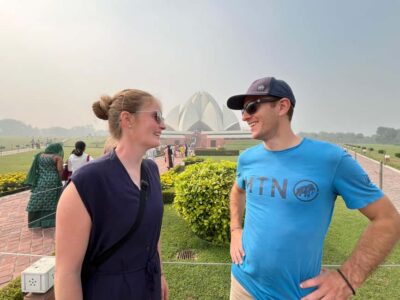
Private 6-Day Golden Triangle Tour: Delhi, Agra, Jaipur by Car
Read our review →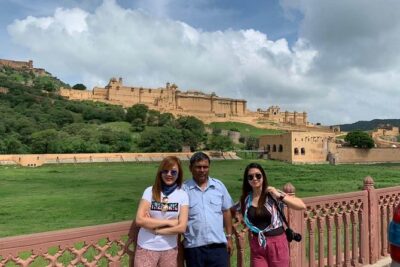
Browse the lists this tour appears in